Issues (10 pages pdf format) by Pia Cook
Longing for love, can make you do bad things. (short, drama, horror)
Trigger warning
This came out a while back, however it wasn’t posted to the site or added to the Hall of Fame.

|
Welcome to SimplyScripts A database of hundreds of downloadable scripts, movie scripts, screenplays, and transcripts of current, classic and maybe a few soon-to-be-released movies, television, anime, unproduced and radio shows. A screenwriter's resource. See below for what is new on the site or click on a script category! - Enjoy! I'm not ignoring you. You just need to check your spam folder. |
Issues (10 pages pdf format) by Pia Cook
Longing for love, can make you do bad things. (short, drama, horror)
Trigger warning
This came out a while back, however it wasn’t posted to the site or added to the Hall of Fame.
An aspiring producer creates a unique way to deliver his pitch.
“Sell your story, sell yourself. Be creative, be brief.” And above all, be unique.
Ahhh, crafting an effective pitch. Ever hear about the writer who sent his shoe and a note — “To meet the talented one-shoe writer…” — with his contact information? How about the scribe who arrived with buckets of chicken for producers, only to ask them to supply the napkins? Or, the guy who handed the exec a softball — an actual ball — and declared, “Here’s my ‘soft pitch’ of an idea.”
Going up?
In the short, “Hold Your Breath, prolific writer Rick Hansberry flips the proverbial elevator pitch right on its head. As the story opens, aspiring reality-show creator Jason (24) corners a senior producer in the elevator. The fast-talking kid manipulates his way into the exec’s office, and drops the name of the producer’s boss — network chairman “Don” — who Jason claims is family friend, “Uncle Don.”
Security is summoned, and Jason threatened with arrest. Does the name-dropping fly? Armed with only 30 seconds and charm, will Jason propel his reality-show concept all the way to the top? And what is this breath-stopping concept anyway? Let’s just say, the story’s surprise employs a trick that’s one for the books…
“HYB” is a clever and fun comedy riff, delivering a creative spin to the traditional elevator pitch that we’re all so painfully familiar with. The doors are wide open — come on in!
About the writer: Rick Hansberry has written/produced several short films, including the SAG Foundation award-winning “Branches.” His first feature is set to be released in the summer of 2014. Trailer available here . He teaches screenwriting seminars and workshops in the Central Pennsylvania area and is presently available for hire for new story ideas, rewrites and adaptations. He can be reached at djrickhansberry – AT – msn, (cell phone 717-682-8618) and IMDB credits available here.
Page Count: 5
Budget: Low. Quick shots inside an elevator, a producer’s “office”, a cast of three, plus a couple extras to portray security guards. Plenty of elbow room.
About the guest reviewer for “Hold Your Breath”: California uber reader/reviewer KP Mackie is working hard on another animated feature. Maybe John Lasseter’s in the elevator Rick envisioned for his story? Hey, um, Rick? –
READ THE SCRIPT HERE – AND DON’T FORGET TO COMMENT!!
FOR YET MORE SCRIPTS AVAILABLE FOR PRODUCTION:
PLEASE SEARCH SIMPLYSCRIPTS.COM
OR THE BLOG VERSION OF STS HERE.
All screenplays are copyrighted to their respective authors. All rights reserved. The screenplays may not be used without the expressed written permission of the author.
Over on the Original Scripts page are nineteen original scripts for your reading pleasure.
– Don
Lullaby (3 pages in PDF format) by Warren Duncan
A dad pushes his daughter on a park swing. A perfectly innocent moment until it’s not. (short, horror)
Check otu the teaser trailer. It is dark af, so be cautioned.
Hi,
There will be some changes coming to SimplyScripts in the upcoming days and weeks. These changes are based on natural realities of the site as well as suggestions from many of you.
1. Format ratings are going away!
The format 8) , format 🙂 and format :B) are going away as will the  ,
,  , format ratings.
You may have noticed that recently the quality of the formatting of scripts has improved. Not perfect, but much better than in the past. Since the barrier to properly formatting ones script has dropped to essentially free (for a beginner), I have been directing new writers to various free script formatting solutions as well as Anthony’s Excellent Article on Screenwriting Software which can be found in his excellent book How to… Sell your screenplay.
2. There will be a great purge of scripts.*
Any script on the discussion board with a one or two star rating will be removed. I will first notify the writers that his/her script will be removed and encourage them to reformat his/her script using Anthony’s E. A. on S. S as a guide for the best software solution.
*Plays will be exempted.
3. “My Script is Awesome, I’m not looking for feedback, I’m only looking to make a million dollars”
The Submit Your Script page will be updated so you can choose whether or not you are looking for feedback on your work. For the near future, I will probably continue to create a discussion board topic regardless of feedback status. That will help to ensure that any critique of a script isn’t falling on deaf ears.
4. pdf only and mandatory disclaimer
I will only accept scripts in pdf format. I may also require title pages that include the warning, “Copyright (c) 2016 This screenplay may not be used or reproduced for any purpose including educational purposes without the expressed written permission of the author.”
These changes will be rolled out over the next couple of weeks.
– Don
Under the Oaks (pdf format) by Ryan Lee
Two Civil War soldiers, one Union, the other Confederate, confront each other during the Battle of Appomattox.
Different shorts have different purposes. Some are meant to shock. Others are meant to explore a theme: a political issue, a moral quandary – or any one of a million ‘what if’ scenarios that can be dreamed up by the creative mind. Then there are scripts that are a little simpler – just a slice of human life and emotion. With the right director, and actors – sometimes those are the most effective.
Here for your consideration is Under the Oaks – a quiet little piece about two soldiers from opposite sides of the Civil War fence. Facing mortality; together. Nothing much is needed in the way of FX. A bit of gunfire sound effects, two Civil War costumes – and two actors that can really command a scene.
Page Length: Four
Expected Budget: Minimal
Primary Genre: Drama
About the Writer: Living in CA, Ryan Lee can be contacted via ryanlee1800 AT yahoo. His IMDB credits can be viewed here.
About the Reviewer: STS
Read Under the Oaks (pdf format)
Find more scripts available for production
This screenplay may not be used or reproduced for any purpose including educational purposes without the expressed written permission of the author.
A traumatic incident from his past clouds a father’s time with his daughter.
Write an original story, breathe life into unique characters, add some color, and — voilá — a compelling story. Writers have it so easy!
If only it were really that simple… Injecting emotion and heart into characters and the story may be a writer’s toughest challenge.
The heart of “Left in the Dark” manifests itself in four-year-old Brianna, “cute is an understatement,” who convinces her father, Zach, to join her tea party. Unbeknownst to Brianna, the tea party’s dark location — a tent of strategically-arranged beach towels in her closet — resurrects in Zach a distressful childhood experience. While he struggles with on-setting panic, a sympathetic Brianna realizes she has the perfect panacea.
The sweet father-daughter relationship in LITD will tug at your heart. For this loving father, his adoring daughter is just the right prescription… As it will be for any director looking for a solid character piece with soul.
So, act quickly. You won’t want to miss out on any of the “ahhh” moments! And neither will your audience!
About the writer: Rick Hansberry has written/produced several short films, including the SAG Foundation award-winning “Branches.” His first feature is set to be released in the summer of 2014. Trailer available here . He teaches screenwriting seminars and workshops in the Central Pennsylvania area and is presently available for hire for new story ideas, rewrites and adaptations. He can be reached at djrickhansberry – AT – msn, (cell phone 717-682-8618) and IMDB credits available here.
Page Count: 5
Budget: Low. A house interior, and a small cast. Secure a tea set, BYOBT (bring-your-own-beach-towels), and don’t forget to invite Jasmine and Ariel!
About the guest reviewer for “Left in the Dark”: California uber reader/reviewer KP Mackie is working hard on another animated feature. KP’s work is available for viewing at moviepoet.com!
READ THIS SCRIPT HERE – AND DON’T FORGET TO COMMENT!
FOR YET MORE SCRIPTS AVAILABLE FOR PRODUCTION:
PLEASE SEARCH SIMPLYSCRIPTS.COM
OR THE BLOG VERSION OF STS HERE.
All screenplays are copyrighted to their respective authors. All rights reserved. The screenplays may not be used without the expressed written permission of the author.
I found this in the comments section from Rob Wright, the film maker of Textual Assassins. There are some great insights here on the film making process. For writers (and film makers) there is a lot of valuable information here on working with a director to go from script to screen.
– Don
Rob writes,
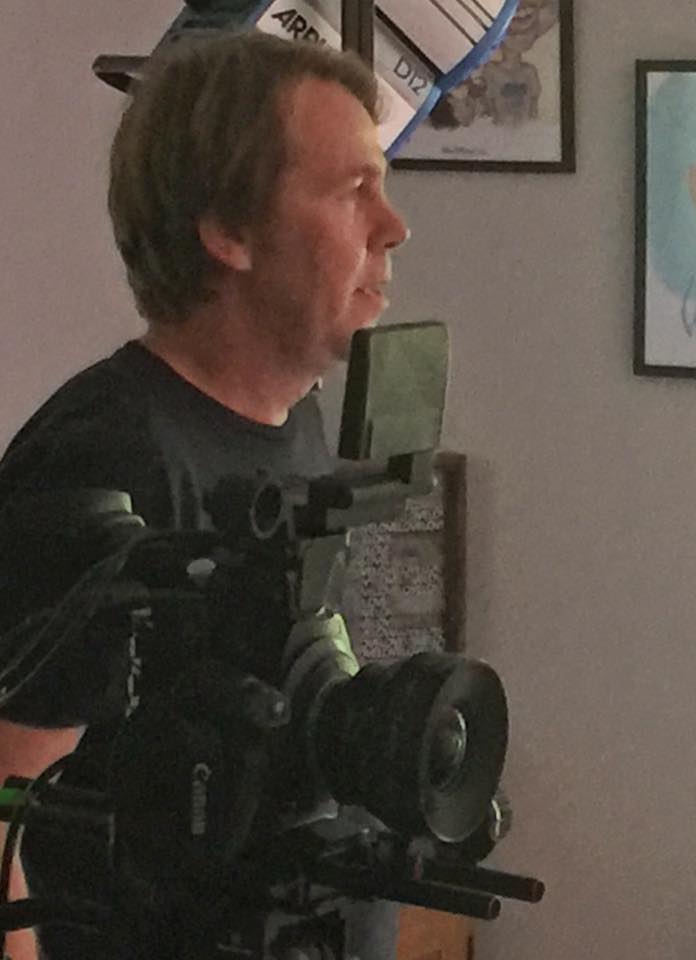 Dear Simply Scripts, hello!
I hope you don’t mind me jumping in on this thread – I’m the film-maker behind Textual Assassins.
First off, I wanted to say a big thanks to Simply Scripts.com for providing such a fantastic resource (for both script writers seeking feedback on their work or looking for opportunities to have their work made, and for film-makers looking for material or writers to collaborate with).
Back in April of this year, when I was considering making a film and before I had settled on Nolan’s wonderful screenplay, I spend many enjoyable evenings here reading many, many screenplays – I was struck by the creativity and quality of the work, but also by the supportive community spirit evident in the forums.
Anyway, by way of giving something back, I thought I might share a few insights about this project in case any of this might be of interest or useful in some way to your community?
I should say at this point (in case it isn’t obvious) that Textual Assassins was my first attempt at making a film (at least on this scale) – I am therefore very much a beginner/indi film-maker still learning the ropes and as such anything I say below should not be taken too seriously – it’s certainly not an industry insight – however, since Nolan Bryant and I managed to come out of our little collaboration unscathed, still on speaking-terms (haha-Nolan), and with a finished piece of work we are both quite proud of, I suppose we must have done something right !
I’ve tried to think of a few things below which might be of interest, but please feel free to ask any other questions if you would like to know more. (Who knows, Nolan might also answer from his perspective too)? If anyone is interested there are some photos, example storyboards, and further thoughts on this Facebook page.
Why Did I Choose This Particular Script?
There are some fantastic scripts on this website, but for me Textual Assassins appealed for a number of key reasons. It’s witty (in a black comedy kinda way), well written, with some great characters and fun dialogue, etc. – but on a more practical level, it was just… ‘do-able’ (read: manageable for me as an indi film-maker). Limited locations / minimal props needed, a small leading cast, concise and to the point (about the right length for me, not too ambitious in scope, but still a challenge). A beginner film-maker’s dream really. I also read the community forum posts alongside the script and got the sense (largely by the way that the author was responding to suggestions and critique from others) that he would be someone I could work with.
What Happened Next? How was Contact Made?
I contacted Nolan via email, and asked permission to turn his screenplay into a short film – I was open and honest with him about my pervious limited experience but sent some examples of smaller projects I’d completed in the hope that this would show I was serious. I was trying my best to give assurances that I’m a ‘finisher’ and if he would take a chance and grant me a time limited option, the film WOULD be made. After a good number of initial email exchanges we settled on agreeable terms. I also agreed to consult before any major changes occurred, and promised to keep him posted on progress as I hit the milestones.
There are Some Differences Between the Screenplay and the Film – Why so?
Both Nolan and I were open from the outset to the idea that some things would change. This was a two-way street though – I suggested a few things, some he was happy to run with, and others, he explained, he would rather not see happen – and this was OK for me too. Nolan was a great person to work with, clearly talented, but also flexible and open – this was important to me.
For the most part I tried to adhere to the original Screenplay and use it as the blueprint for the story, but here were a few reasons for change, which might be food for thought?:-
i. Localisation – the original script used some phrases that tied it to a particular region (of the world) – and yet the film was going to be made elsewhere (I’m from the UK so that is where the film would need to be set, Nolan is not). A example: the original script included one character described as “bush-league” – this is simply not a phases well understood in the UK (it was changed by me through negotiation with Nolan to “School-Boy error” to address that).
ii. Character Names – some of the film characters have different names to those in the Script (eg. Kyle became Big-Dave). Again, a bit of a localisation thing for me. Kyle isn’t a widely popular name in the UK in the age range of the character. Also, this wan’t a big deal, but my actor playing the role of Kyle looked to me more like a BIG-DAVE!
iii. Other changes came about during early rehearsals or indeed ad lib, where my actors felt their characters would respond slightly differently. As their Director I wanted to allow them this ownership of the characters. Some other direction changes came about due to taking advantage of the layout at the locations we had available. The two pillars in the hallway were just crying out to be used for the stand off between PETE and DAVE for example.
iv. Another somewhat larger change occurred towards the end of the film. In the original screenplay when the police show up, the five assassins are instructed to “drop their guns and raise their hands” and we do not know their fate (but assume they are arrested?). However in the film, I wanted the viewer to see Rookie making a move (and we assume hit fired at the police?). Nolan and I talked this through, along with a third possible ending and I had agreed to shoot all three alternative endings and then we could evaluate which worked best in the edit. As it happened, unfortunately, I overran on the schedule during the film shoot (a night-time shoot at the location) and had to make a quick judgement call in the moment – either continue shooting and risk annoying the location owners (it was about 2:30am and the flashing police lights were becoming annoying!) or cut our losses and only shoot one of the endings. I opted for the latter.
(I suppose the point here is, sometimes even with the best will in the world, a Director might need to make changes and sometimes they need to be made quickly).
How many table-reads / rehearsals did we have with the cast before shooting?
We had rehearsals only for the 3 main characters (Assassins – PETE, DAVE & ROOKIE). The other actors learnt their (few) lines independently and I gave direction as we filmed on location, we filmed multiple takes till I got what was needed. Remarkably, other than the actor playing ROOKIE, the cast consists entirely of good friends of mine whom had zero previous acting experience (I think they did a great job!). I arranged for PETE and DAVE to have two acting classes before we held rehearsals with ROOKIE. The actor playing ROOKIE was more experienced and helped a little on set with acting direction. We had only two rehearsals sessions in total before we filmed.
How long did it take to make the film?
5 Months (not a day-job) – although in reality most of this time was spent planning. Getting the actors on board, converting the script to storyboard, then to shooting script and shortlist, location-hunting, prop-making, organising dates and times when I would be able to access equipment (camera and lighting etc.) and when people would be able to make it. Once the planning stages were done, the film was shot during only 5 shoot-days (2 long days in the main house location + 3 shorter sessions at the other locations). There was a great deal of pressure during the shoot days, as I was leaning on the job to some extent, and was very mindful to keep the location owners on board.
How much did it cost to make the film?
Textual Assassins took a great deal of time, energy and effort to make – but this was largely because I was trying to do pretty much everything on my own – a labour of love you might say. I wanted to direct this film, yes, but I also wanted to use this opportunity to learn something about the other key roles typically associated with film-making. This means that I made the storyboard and props myself, I sourced the locations, organised the cast, arranged the acting-classes/rehearsals, stood as DOP, I operated the camera and microphones, I set up the lighting, recorded sound-effects, edited the footage, colour graded the film, decided upon the soundtrack music, I composed the additional music, etc, etc.
Honestly – I think I gained about 5 years of real film-making experience by tacking this project in this way, but it was a heck of lot of work for one person alone and much more that I had anticipated.
Other than a few items which I bought or hired – most of the technical equipment was hired for free through a lot of begging and borrowing! My actors (my friends) all agreed to work for free (although I fed them!) and they all commented that they really enjoyed the experience very much.
Textual Assassins was made with a budget of only c.£300 (c.400 USD / c.350 Euros).
…anyway, I hope this post proves to be in some small way useful to the community here at Simply Scripts. I know the film isn’t perfect, but given the constraints highlighted above, I’m quite pleased with the outcome and I believe Nolan is too. We thank you once again for this great resource through which we were connected.
Keep writing the great material people!
Rob.
Textual Assassins (10 pages in pdf format) by Nolan Bryand
Being a hitman is tough, killing indiscriminately is harder than you’d think. (Short, Dark Comedy)
Forget-Me-Not
“A troubled inner city youth liberates a forgotten community garden, unlocking a magic that reconnects his neighbors with their lost loved ones.”
When you think about it, every story at its heart is drama. By their very nature, they require a dramatic force to keep their audience’s attention: characters struggle – clash against others, providing conflict. Ebb and flow. Back and forth. There’s a rhythm to telling a riveting tale – no matter the supposed “genre.”
Pulitzer Prize winning journalist/author Anna Quindlen once wrote “Every story has already been told.” If so – how do you make YOUR drama unique? One method is to swirl additional genres into the mix. Do it right, and you’ll have a winning recipe on your hands!
And that’s the appeal of Steven Dexheimer’s inner-city story, Forget-Me-Not. On the surface, it’s a drama about troubled 16-year old Michael who lives in the tenements. His four friends aren’t exactly a gang, but peer pressure’s a powerful force on the street. Michael wants to fit in, but he’s got an interest far outside their sphere; he’s been spotted in the neighborhood community garden with Mrs. Friedman, an elderly lady who’s as far away from “ghetto” as one can be (at least outside of Ikea).
When Mrs. Friedman falls ill, paramedics load her into an ambulance. A nosy neighbor recognizes Michael as a frequent visitor to the garden, and starts asking him questions. In front of his friends.
Michael visits Mrs. Friedman in the hospital. She asks him a favor; care for the garden while she’s away. A good kid, Michael does what he can… but falls afoul of his old gang, who take a dim view of Michael’s new “hobby.” As the garden grows, so does the animosity – forcing Michael to choose between new allegiances and old, in a world where very few good things grow….
What makes Forget Me Not a stand-out script? Let’s pluck those petals and count the ways:
Friendship (and a touch of lost romance): Mrs. Friedman’s love for her dear departed “Stanley” (symbolized by the blue flowers she nutures in the garden), and the bond that forms between her and the teen.
Crime: A gritty inner city setting – depicting “thug life” and its very real consequences.
Fantasy: Though “rooted” in reality, something magical happens in the community garden. Affecting far more than the flowers…
Poignantly written, Forget Me Not weaves these themes together seamlessly – creating a fresh story of hope, community and friendship. If you’re a director looking for a story with substance, then F-M-N should be directly in your line of sight. Visually compelling with dramatic impact. You’d better act now – before this one’s off the market…!
About the writer:Steven was a finalist in the coWrite competition, an innovative community-sourced screenplay developed in association with respected production company Benderspink (A History of Violence, The Butterfly Effect). He also took 1st Place honors in the March 2009 MoviePoet short script competition.
Steven is a member of Writer’s Boot Camp, was a finalist in the 2008 The Movie Deal screenplay competition and has twice been a finalist in the NYC Midnight Screenwriting Competition (2007 & 2008). He holds a Bachelors degree in Theater and an Associate degree in Film/Video Production. More of Steven’s work may be found at his website: www.StevenDexheimer.com (email: Steven “AT” 8mdFilms.com)
Pages: 14 pages
Budget: Moderate, but not pricey. And definitely worth the investment. An establishing shot may be enough to set up the inner city neighborhood, hospital, and high school. An actual or imitation hospital room, classroom and bedroom shouldn’t take much of a bite from the budget. Almost an ensemble piece, there are several main characters – all likely coveted roles – plus some extras to act as neighbors. But get yourself a good garden. Because it’s a star of this show, as well.
About the reviewer for Forget-Me-Not:California uber reader/reviewer KP Mackie is working hard on her animated feature. KP’s work is available at moviepoet.com!
READ THE SCRIPT HERE – AND DON’T FORGET TO COMMENT!!
FOR YET MORE SCRIPTS AVAILABLE FOR PRODUCTION:
PLEASE SEARCH SIMPLYSCRIPTS.COM
OR THE BLOG VERSION OF STS HERE.
All screenplays are copyrighted to their respective authors. All rights reserved. The screenplays may not be used without the expressed written permission of the author.