Tattooji (pdf format) by Anthony Cawood
Filmed by Vintage Production
Tempers quickly fray when an inconsiderate boyfriend wastes their money on yet another useless gadget and she takes issue with his childish spending. (Short, Drama)

|
Welcome to SimplyScripts A database of hundreds of downloadable scripts, movie scripts, screenplays, and transcripts of current, classic and maybe a few soon-to-be-released movies, television, anime, unproduced and radio shows. A screenwriter's resource. See below for what is new on the site or click on a script category! - Enjoy! I'm not ignoring you. You just need to check your spam folder. |
Tattooji (pdf format) by Anthony Cawood
Filmed by Vintage Production
Tempers quickly fray when an inconsiderate boyfriend wastes their money on yet another useless gadget and she takes issue with his childish spending. (Short, Drama)
The Grieving Spell (13 pages in pdf format) by Bill Sarre
A grieving man uses a special magic to relieve the pain he feels following the death of his wife.
It’s a paradox – so many really good stories revolve around a character’s bad decisions. This is definitely one of them.
Written by screenwriter Bill Sarre, The Grieving Spell tells the eerie tale of a man’s crumbling emotions after the loss of his wife Helen in a car crash… and his relentless quest to find relief from the pain chipping away at his psyche. So he makes a bad decision.
He turns to witchcraft.
Inspired by his departed wife’s interest in Wicca, Lawrence pays a visit to Astrid Dove – the High Priestess of the New Dawn Centre. “I need your magic to take the pain away – allow me to heal on the inside,” he tells her. Though he swears he’s not looking for an easy fix, Astrid has reservations. “I’m not sure this is the right approach for you.”
Talk about an understatement.
The bereaved widower persists: he desperately needs to move on. But what Astrid doesn’t know is that there’s more to Lawrence’s emotional crisis than loss and grief. There’s jealousy. And rage. And more than a touch of guilt.
A reluctant Astrid gives him a “grieving spell”, to be performed around a large fire. The priestess counsels as she writes it down: “Magic’s a subtle art. It’s not easy to predict.”
Understatement (and bad decision) part two.
As Lawrence performs the spell on a beach one starry night, a hazy figure emerges from the embers. Lawrence’s bad decisions have come back to haunt him. And finally set things right…
The Grand Prize Winner of the London Film Awards, The Grieving Spell is classic Monkey’s Paw horror. Watch out what you wish for… unless it’s a script like this, of course!
Budget: A few locations (car, beach, diner and office.) Four main characters… and some minor FX that can easily be done in post.
About the writer: An award winning writer, Bill Sarre has had scripts place both finalist and quarter finalist with Page and Bluecat. Bill can be reached at Bill.sarre (a) gmail
About the reviewers: Scott & Paula Merrow are a husband and wife screenwriting team. Since 2006, they’ve written over 50 short screenplays, several of which have been produced. They tend toward family-friendly scripts, but they’ve written a little bit of everything: horror, fantasy, sci-fi, comedy – the whole nine yards. They’re reachable at scott-paula (a) comcast.net
Read The Grieving Spell (pdf format)
Find more scripts available for production
This screenplay may not be used or reproduced for any purpose including educational purposes without the expressed written permission of the author.
Evil Karma (6 page horror in pdf format by Warren Duncan
An evil man pays for the sins of his past.
The Gifted Photographer (pdf format) Ian J. Courter
A photographer pays a house-call to shoot a family portrait where his true talent becomes apparent.
Photographs, those treasured mementos of our lives – they can chart a life from birth through to adulthood, and beyond. We keep photos in our wallets, in lockets around our necks, in photo-frames by our bedside tables. Photographs allow us to freeze moments – to travel back in time.
The Gifted Photographer is set towards the end of the Victorian era. At first glance it conjures Great Britain, but America had its own Gilded Age, most notably in the regions of New England and the Deep South. Think Gothic Architecture, the Women’s Suffragette Movement, Republican domination, and literary greats such as Harriet Beecher Stowe and Mark Twain. This was also a period characterized by high society and strict morality.
Ian J. Courter manages beautifully to evoke the images of the time – the cobblestone streets, horse drawn carriages and top-hats.
Photography at this time was in its infancy – there was no such thing as the ‘Selfie’ and no such thing as Instagram or Snapchat. The taking of photographs, in particular portraits, was only ever done for special occasions.
The story opens on Michael Houtman, the titular photographer of the piece. Herbert and Margaret Jaffe have requested his services for a very special family portrait with their daughter, Linda. Michael strikes up a conversation with Linda and discovers this sweet young woman suffered a nasty spill on the ice a few months ago. The accident has left her sickly and confined to a wheelchair, but this morning she wakes to a perfect Spring day feeling better than she has in a long time – and she’s ready for her close-up.
But this is no ordinary day, no ordinary photo-shoot, and no ordinary photographer…
Far be it for me to shed too much light, or bring into focus the darker themes and rich cultural history explored in The Gifted Photographer, suffice to say the Latin phrases Ars moriendi and Memento mori both give clues into a not so well known practice explored in this unique tale.
Of course, all you have to do to find out more is read the script. You’ll not only discover the secret talent The Gifted Photographer possesses, but will also uncover the talent of writer Ian J. Courter.
With an ending that will stay with you long after the lights come up (we recommend reading it at night) and a final sting in the tail you won’t see coming, we advise you to get The Gifted Photographer in the can quick as a flash, before somebody else snaps it up.
Pages: 8
Budget: A little will be needed to make this one period. But given what you get in the return, it’s definitely worth it!
About the writer: Ian J. Courter has an academic and technical-writing background, and is published in both fields, so a shift to another form of writing seemed natural. He strives to combine his writing skills with nearly two decades of military experience to develop screenplays with vivid locations and in-depth, realistic characters. What started as a hobby quickly became a passion. In only a few short years, he has written three feature-length screenplays and nine short scripts. He currently has several feature-length scripts in various stages of development and continually seeks inspiration for more. His email address is ian.j.courter “at” gmail.com.
About the reviewer: L. Chambers has been writing all her life – especially in her head, and on scraps of paper. It’s only in the last few years she began to get serious about screen-writing. Prior to this she worked in the Features Department for ABC TV as a Program Assistant, and trained as a FAD. She currently works as a freelance web-content editor and lives with her husband (also a screenwriter) in Sydney, Australia.
Read The Gifted Photographer (pdf format)
Find more scripts available for production
This screenplay may not be used or reproduced for any purpose including educational purposes without the expressed written permission of the author.
Fangs (pdf format) by Jean-Pierre Chapoteau
A vampire offers his services to a slave for the exchange of food.
Adversaries. They’re the essential ingredient for conflict. Protagonist vs. Antagonist: equally strong and well defined. To create a compelling tale, one needs that Yin and Yang. Characters that need something from each other. Unwilling to stop until that urge is satisfied…
It’s a lust that works, every time. Especially in Jean-Pierre Chapoteau’s short script, Fangs.
As the story opens, slave fieldworker Mogey heads to a dark and dismal storm cellar. There he encounters Aldazo – an ancient vampire in extreme distress. Having lost his way while hunting at night, Aldazo’s been separated from his “minions”. With daylight beckoning, the creature’s taken shelter in the cellar. Vulnerable, and mortally weak from hunger, Aldazo’s in a terrible bind. He offers the human a deal he can’t refuse: bring him some needed “prey” – and Aldazo will grant Mogey his greatest wish.
At first, the skeptical slave resists. Why negotiate with a “rank, deadin’ bloodsucker.” Especially a creature as shifty and evil as Aldazo seems?
But Aldazo insists. Wielding a wiley persistence honed throughout the centuries, the vampire hammers out an agreement. Mogey will fetch Aldazo a young slave girl to feed on. In return, the vampire will call in a few favors. From creatures even more old and powerful than he.
Mogey takes down names and leaves, setting out to fulfill his end of the deal. But can the vampire be trusted? And are Mogey and Aldazo being kept in the dark… in far more ways than one? The two are headed for deadly conflict. From which only one can emerge victorious….
More than than your run-of-the-mill vampire tale, Fangs is filled with rich history and dialogue. It’s a smart story, awaiting a smart director. And so we ask: are you the chosen one?
Pages: 5
Budget: Manageable. Stairs and a basement could represent a cellar. Both the male protagonist and male antagonist are distinctive and deserve special attention. We’ll leave it up to the director to reveal which is which. 🙂
About the Writer: Jean-Pierre Chapoteau started writing feature-length scripts in 2005, then focused on shorts in 2009. Since then he’s had three scripts produced and two more optioned. He has won several awards for his shorts. Jean-Pierre was a finalist in the RAW TALENT Competition for his faith-based feature-length script: ‘Far From Perfect.’ And was also a semi-finalist in the SLAMDANCE teleplay competition and a finalist in the OBSWRITER teleplay contest for his adapted teleplay, Curb Your Enthusiasm: The Guardian. You can contact Jean-Pierre Chapoteau at: jeanpierre425 (a) gmail.com
About the Reviewer: California über reader/reviewer KP Mackie is working hard on her animated feature.
Read Fangs
Find more scripts available for production
This screenplay may not be used or reproduced for any purpose including educational purposes without the expressed written permission of the author.
Paramount comes out with Silence for your consideration

 Silence – May 7, 2015 final shooting script by Jay Cocks & Martin Scorsese – hosted by: Paramount – in pdf format
The story of two Catholic missionaries who face the ultimate test of faith when they travel to Japan in search of their missing mentor – at a time when Catholicism was outlawed and their presence forbidden.
Information courtesy of imdb.com
Check out more Scripts Studios are Posting for 2016 – 2017 Script Award Consideration
Turn Me On Dead Man (pdf format) David Clarke Lambertson
Three band mates cover up the death of their famous bassist.
When someone asks you to name an urban legend, Bigfoot might come to mind. If not that hairy beast, then perhaps Bloody Mary. Or that creepy stalker guy – with a steel hook for a hand. One that probably won’t occur to you is “Billy Shears.” But if that name doesn’t ring a bell, don’t worry. Your mother would know. ‘Cause she was born a long, long time ago…
Based off the legend of a world famous doppelganger, Turn Me On Dead Man tells a tale of a man plucked from obscurity and transformed into a music icon.
With a little help from his friends.
Those of you old enough to have once been called “hippies” are probably catching on right about now.
Imagine – a tongue-in-cheek retelling of the infamous “Paul is dead” hoax.
That is, unless it’s really true…
The script opens after Paul McCartney’s fatal car accident. A stunned John, George and Ringo come together to conspire – hatching a plot to replace their friend with a look-alike, and keep the Beatles’ dream alive. As luck would have it, they discover a dead ringer. The one and only Billy Shears.
But can Billy and the lads Fool the World? Or will the band inevitably leave a trail of musical crumbs that point their loyal fans towards the truth?
A fab mixture of folklore and fantasy, Turn Me On Dead Man is chock full of enough jokes to fill Albert Hall. See if you can spot all the Beatle lyrics hidden in the dialogue… beginning with the title, all the way to the horrifying end.
And if you don’t know what we’re talking about by now? Get thee to Pandora. Immediately!
Pages: 8
Budget: Moderate. Locations include a recording studio and a concert backstage area. Costumes require Beatle suits and wigs. If you’re lucky, you might even convince Ringo to play himself. All he has to do is act naturally.
About the writer: David Clarke Lambertson took up writing rather late in life having already been retired before he put pen to paper (okay – finger to computer key) for the first time. His favorite genres to read and write are dramedies and romantic comedies. He has written three features; The Last Statesman (a Nicholl’s and BlueCat quarterfinalist), The Beginning of The End and The End (a Nicholl’s quarterfinalist and PAGE Awards semi-finalist) and has recently completed a new comedy – Screw You Tube.
About the reviewer: David M Troop resumed writing in 2011 after a twenty-five year hiatus. Since then, he has written about 50 short scripts, two of which have been produced. Dave would like to make it three. He is a regular, award-winning contributor to MoviePoet.com. Born on the mean streets of Reading, PA, Dave now resides in Schuylkill Haven with his wife Jodi and their two lazy dogs Max and Mattie. He can be reached at dtroop506 “AT” Gmail.
Read Turn Me On Dead Man (pdf format)
Find more scripts available for production
This screenplay may not be used or reproduced for any purpose including educational purposes without the expressed written permission of the author.
Over on the Original Script page are twenty seven original scripts for your reading pleasure.
– Don
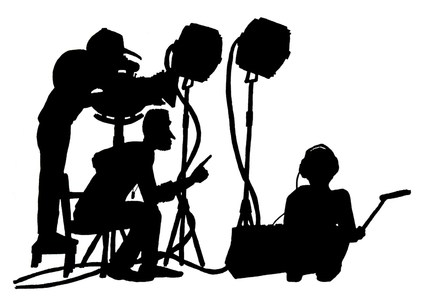 Making a movie or a short film can be an extremely exciting and fun adventure. It is a ton of fun being on a set and shooting your own film. However, it can also be a complete nightmare, especially if you are not prepared or really have no idea on how to go about it. I have been making short films now for five years, and I have had some success at it. And I keep growing as a filmmaker, because no matter how many issues come up, I keep working at it. But for the most part, each film I have made has been very challenging because problems ALWAYS come up on a film set. It will be your job to navigate through these rocky times as it will most likely be your film. Don’t worry about it. If you learn how to stay calm and be focused on just solving these issues as they arise, you will have a great and rewarding experience. Following are five tips that I feel can smooth your way into filming. These tips address issues that I feel tripped me up several times and I want to share them with you, so you won’t make the same mistakes, because “Time Is Money”. If you remember this one thing, it will go a long way to keeping you on track and making a great film.
1. Be A Storyteller
The Bottom Line is this: The director is first and foremost a storyteller. You must have a cohesive, compelling story to tell. This is not a difficult thing to do, as everyone has at least one story to tell from their life. Whether it is a breakup, or a family trauma, or a secret desire… the list is endless. You have to trust that no matter how painful the story is, or how embarrassed you are of that story, it has been experienced before by someone else. This is not a bad thing… it means that we are all connected in many ways and that these stories are indeed universal. We all have a unique story to tell that many people will relate to and identify with.
2. Write Every Day
Many times I hear writers say they are stuck or are in a writer’s slump, because no ideas are coming or they don’t know what to write. They want an original idea for a film that nobody has ever seen before. They want the next great original idea that rocks the film world. Some of them will wait for years for that inspiration for the next great film. Now…you might get angry with me for saying this, or you will probably vehemently disagree, but I don’t think this should be your goal. Just write… let the words just flow out of you. Edit it all later. Write gobble-dee-gook, write crap, write anything. Just write. You can worry about judging it after you are finished. Think of it this way… A sculptor starts with a huge block of stone. This is your “gobble-dee-gook”. Then begin to slowly carve away the stuff that you don’t need. Carefully reveal the story you want to tell. In the end you will have something that you will be excited about putting on film.
3. Learn How To Communicate
Several directors I know have become very successful in their careers as filmmakers. They learned how to have some knowledge about every aspect of the process of filmmaking. They have learned how to speak the language of every person on their set, from costumes to the actors to the director of photography (D.P.) to the grip to the sound designer to the art director. What I am trying to say is this… I have almost totally screwed up a couple of my films because I didn’t communicate well enough with my crew. I wasn’t clear enough with a couple of my crew members of what I wanted, which then led them to do what they thought I wanted. It almost destroyed me and my film. Think of it this way. Everyone of your crew is an expert in their chosen field. You are being respectful of them, in turn they will do their best to give you what you are seeking. And that is called “Collaboration”. And good collaboration almost always leads to a great film.
4. Set Up Your Shot List Before Shooting
There are some directors who will storyboard every single shot on their shot list. Alfred Hitchcock was notorious for this, as he was also notorious for giving his actors very little freedom in their movements and portrayal of their characters. I don’t do this personally. I write out a complete shot list of every scene that I want to film. This is my process of making my shot lists:
I look at my script and write down the first scene and how I want to shoot it or how I want it to look on film. I normally start at the beginning and work my way through. I study the first scene over and over again. I look at the number of ways that I would like to shoot it. I will then write down the first set-up in regards to the camera angle and type of shot I want. Then I will choose another angle to shoot the same scene. I will then need to get coverage on these shots so that when I am editing, I have something to cut to for a reaction. And so when I have 4-5 different shots or set-ups for that first scene, I will then move on to the next scene and do it all over again. I find the act of setting up scenes is one of the most creative parts of the filmmaking process… for me anyways. There are so many options to choose from andso many different ways that you can tell your story. This part is where I go through all of my options and run the scene in my head and visually see how it plays out. Does it work? Or is there another, better way to do it?
What I am trying to say is this – ALWAYS finish your shot list before you get to your set. It will give you a road map of what you want, and how you will shoot your film. And, because you are so well prepared, you can easily replace or remove a shot that you don’t need. Or you will be inspired to get another shot…one you didn’t think of before. And when this happens, it always feels great.
5. Create a Real Environment
Creating a real world or environment for your actors or for the film is so important, that you will be surprised how easy filming is when you get this right. This is why I love shooting on real locations. The environment is real, as it is the world of the story. This is very helpful for your actors to believe the world they are in. Their imaginations must have something solid to grasp, in order to create believable characters. Wardrobe, lighting, their creativity all help in achieving truth in their performances. Now shooting on a sound stage is great as well, as long as you have the money to do it, or if your production is large enough where this is in your budget. I am at the stage where I go and rent locations as this is much cheaper and more time efficient. Even if you are on a soundstage you must not skimp on making the world as real and believable as you can.
So these are five important tips that every filmmaker should have addressed before shooting your film. If you take the time to prepare for your shoot correctly, when you actually get to the set, things will flow much more smoothly that if you were careless. Because if there is one thing you can always count on, is that there will be “challenges” that arise on the set. It is how well you deal with them that will make or break your film.
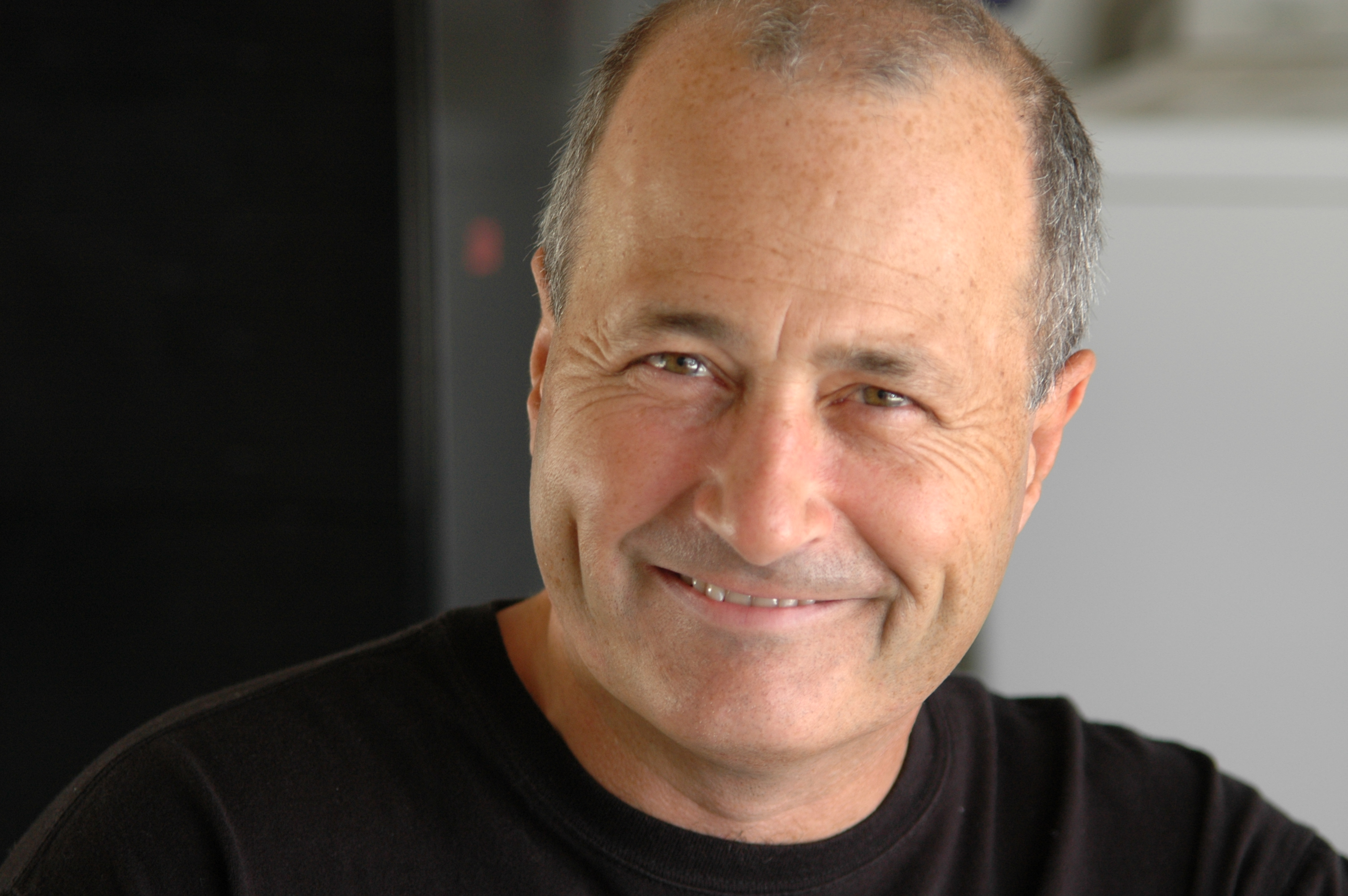
About The Author: John Montana is an actor living with his wife in L.A. and has begun to make short films. His most recent film, Hungry has been accepted into 27 film festivals all over the world. Watch his free online movies at No Title Production Films.
Images courtesy John Montana