SimplyScripts.Com Logo

Wednesday, July 20, 2016

Interviews: A Meet N’ Greet with Screenwriter Rick Ramage - post author Anthony Cawood

Q: Could you give me a little bit of background on how you got into screenwriting?

Oddly enough, I became a screenwriter by default; I wanted to be a novelist. I had just written my first novel and I sent it to someone whose opinion I trusted. He told me my book wasn’t very good – but that I was a good writer. He said he thought that I was very visual. So he suggested I try writing a screenplay. Thank God he was nice enough to encourage me!

Q: Was The Proposition the first screenplay you found success with?

While I was still in film school, I managed to option a script (for very little money). It was called “Triad” and it was a psychological thriller. But it gave me a tremendous surge of confidence to actually option a script. So I wrote The Proposition next. And that was my first major sale.

Q: How did you connect with the filmmakers and sell The Proposition?

A friend of mine showed the script to an exec at Disney – she didn’t buy it, but she did like the story and the writing. That led to an introduction to an agency. And that led to the script getting into the hands of the right producers. A few of those producers wanted it bad enough to get into a small bidding war. I think the whole process, from getting the script read, to getting an agent, to actually selling it took about a week. It was so fun – changed my life, too.

Q: The Proposition has a great cast – did you get to be involved in the production at all?

Now that I look back on the whole process, I was very lucky, because the producers and the director were really good to me. The actors were awesome, too. Even though I was a complete rookie, everybody treated me with great respect, and — more importantly – the script was treated with great respect.

Q: That was followed by Stigmata – another great cast. How did this script come about?

Stigmata was a re-write assignment. And yes, great cast. I was asked by MGM producer, Frank Mancuso Jr. to do the re-write and we pretty much went right into production after only a few drafts.

Q: Studio pics and living the screenwriter dream …

One of the best things to come from putting a spec script out, is that even if a studio doesn’t buy it, there’s a very good chance that you might pick up a writing assignment if they like your writing. I always try to assure new writers that a rejection is not always a rejection of your story or writing. It’s usually because the studio already has something “similar” in development, or because that type of story just isn’t going to line up on their slate. Often times a producer or an executive will read you and if he or she likes your writing, they will think of you for other projects they may have in development.

Q: Where did the inspiration for “Haunted” come from?

My manager asked me to meet with Andrew Cosby, the co-creator of the show. He pitched Haunted to the producers and they brought me in to work with him. Andy is a very collaborative guy, and we got along great in the writing process.

Q: Now the move to TV is fairly common, less so then. What prompted the shift?

To be honest, I really can’t remember why writing for TV even sounded good. I was making way more money as a feature writer … so I suppose it was the challenge.

Q: Peacemakers was a change in genre … do you have a particular genre?

Good question. I’ve never wanted to allow myself to get pigeon-holed into one genre, because that very definitely limits your marketability for assignments. Every time I write a spec, I try to keep it fresh (genre-wise) so that producers know I have a wide range.

Q: How did ‘Ichabod’ come about?

Ichabod was a labor of love.

I’m a great fan of classic literature. I sold a spec script for a lot of money that year, and I wanted to do something cool for my kids. (They were in 4th or 5th grade at the time.) Most dads go out and buy a pony or something – but I wrote my kids a play.

I approached some song-writers that I knew and suggested we do Ichabod for kids in grade school and middle. As it turned out, we had 89 sell-out performances and won some awards with the play … But my feature career was just too busy to run a theatre company, so I let the company go for several years. Then, when I decided to see if I could direct a film, I went back to Ichabod. I was honestly thinking about doing a TV series for kids based on the classics. So it (kind-of) made sense on a business level … It aired on PBS and I thought I was going to launch the series, but then my funding fell through. It’s still a dream of mine to do the series, which I called “Timeless Tales”.

Q: How was the experience of directing Ichabod?

Flat –freaking– awesome. I’ve never had more fun. It was truly one of the best creative experiences of my life.

Q: Thoughts about moving to LA to pursue a screenwriting career?

I’ve always said the hardest thing about being an artist is financing your life while you do the work. I think writers should live where they can do their best work … If that means Denver, or Miami or Fargo — so be it.

I also think too much emphasis (especially for new writers) is placed on living in LA. Meeting with executives and producers don’t just fall out of the sky. Until you have a bullet-proof script, you’re really not going to get good meetings anyway. Once you have a truly great writing sample, I believe producers and agents will find you. LA is always looking for the next great talent that will take the world by storm.

My advice is get the script right, and the rest will take care of itself …

Q: Your career appears to have gone quiet for a few years. What were you working on and what happened to all those projects?

The truth is, I took a few years off because I felt burned-out. I thought I would finally write a novel, but I wasn’t in the right frame of mind. Then one day, a friend of mine called and asked me pretty much the same question you just did: “Where have you been? You’re not working …” I laughed when he said that he was really glad I took some time off, because now he could finally afford me because my quote would suck … He said he wanted me to write the script for a project that he thought he had set up – but that didn’t work out. So then he asked me if I had any old specs sitting around. I said I had one, but I was saving it so I could direct it … Needless to say, he talked me out of that, and we took the script out … It sold over the weekend, and we had a green light within the week. The script was “Heaven Sent” due out this holiday season.

Q: What was the genesis of the documentary?

I’m laughing because I still don’t know how that project landed on my imdb page! I need to take it off! … It was really just a small favor for a friend : )

Q: When it comes to feature scripts, how do you approach structure? Do you follow or advocate any particular method?

Yes. Yes. And… yes!

I am a creature of method. And I do have a very particular way of addressing structure, and character development based upon a method that I’ve developed over the years. But if I go into it here and now, I’ll spoil the first episode “Method vs. Madness” of The Screenplay Show… And it’s so important for me to get it right when I describe it to new writers. I honestly believe it will make a difference in the way they approach story.

Q: Have you ever tried the conventional “breaking in” routes?

To be honest, no. I’ve never had to write a query letter or make a cold call as a writer. I’ve been really lucky in that I was approached by my first agent because he read one of my scripts (through a friend) which then sold. So you might say Hollywood found me.

That’s why I tell new writers that it really is all about the material. My career didn’t start because I was good in a pitch meeting or because I wooed an agent, or because I was a nice guy that producers wanted to meet. Producers buy your work and employ you to rewrite their scripts because they respect your writing …

Q: You are now launching a new venture: The Screenplay Show. Where did the idea for that come from?

A friend of mine who runs a writer meet-up group asked me to do a seminar for his writers a few years ago. Very reluctantly, I agreed… But then instantly regretted it because I was completely afraid I would bore people to death, droning on about a “how to” approach.

So I pulled my editor into the mix, and we put together a very visual presentation which actually shows examples of screenwriting elements, such as writing transitions, creating character arcs, writing action, the plot, etc.

For instance, we pulled about fifty stills of Jack’s character from “The Shining” to visually document his character arc – or descent into madness. It was very effective, because people could see it in real time when it was compared to the script (I put page numbers beside the stills). You get the idea …

But what really surprised me is that the writers were almost more interested in the “writer’s experience” … They had more questions about method and the biz, than they did about the nuts and bolts. So that got me thinking: if I combine my “story” with the nuts and bolts, it’s really a very different kind of writing series.

I’ve been extremely fortunate during my 25 year career to have developed scripts with some of Hollywood’s top producers and directors. Those experiences have changed and informed the way I write and approach story. After all, they were generous enough to share their knowledge with me for one purpose – to get the story right. So, I began to think in terms of presenting that knowledge and those insights in the form of a narrative, or show style.

Q: How will people be able to see it / get involved?

Each episode will be approximately 30 minutes. You will be able to purchase and stream at our site. We will consider moving to other formats later. I’m also talking to a cable network, so that is a possibility now, too.

Q: One of the accusations leveled at other gurus is that they haven’t had anything produced or sold. But that can’t be leveled at you – is that what makes your offering different.

I hope so. I mean, you can talk all day about the nuances that make a race car driver great, or a football player, or a ballet dancer, or an artist – but I would hope you’d get the information from someone that has actually been “to the show” … Otherwise there is too much information missing from the actual process of learning. It’s called trial and error. You learn things in the script development process that just isn’t covered in books.

I believe that people know instinctively that you learn by doing, much better than by reading it in a book or a talking-head video. One of the things that I feel is really important, is to talk to new writers about rejection and heartbreak. In “The Screenplay Show” the highs and lows of the craft are talked about quite naturally in the narrative since I have had plenty of both in my career.

The trick is to learn from it and not take rejection too personally.

Q: What exactly is it, and what will the episodes cover?

The Screenplay Show is an actual show you’ll be able to watch. It’s a very different approach to screenwriting, from a personal point of view. It’s both the story of a writer’s experience in Hollywood, and how those experiences have informed the way I write and how I have survived for 25 years. I’ve been very lucky in that I’ve developed material (from spec scripts, to rewrites, to book adaptations) with some of Hollywood’s most talented directors and producers. That has definitely informed the way I go about my business . I will be sharing that information and knowledge — both technical and philosophical – in a narrative, visual way during each episode of The Show.

The Episodes cover these topics:

1) Method vs Madness:

We live in two worlds: the physical and the mental. New writers are often balancing a full-time job with trying to find quality time to write. I talk about my own method, and how I discovered a way to get the work done. But I also explain how important it is to have a method that is intellectual – which leads to episode 2 called ….

2) “Write with Questions”

A very famous author gave me this tip, and once I came to understand exactly what he was talking about. I realized that he had just given me a method (of the intellectual kind) that actually helps me solve problems. I believe learning to write with questions is the single most important factor that has helped me set up and sell over 40 scripts in Hollywood. But here’s a teaser: it’s not what you think it is …

3) Writing the Beat Outline

Over the years, I learned to write my outlines using a technique that also informs the way I pitch. Most new writers think a pitch is a condescended version of the story … But a pitch is also the story of how you’re going to write a killer script. Don’t forget, you’re also auditioning to prove that you have the chops to back up your pitch. In The Show, I’ll share a technique that will help you get on the page as a writer – because it will assure the producer you’re not only a good storyteller, but ready to go to script.

4) Tone

It’s my opinion that this is where most scripts live or die. Most new writers DO NOT know how to give their script a voice. In fact, when I’m asked to do a rewrite, that’s usually what they are looking for – the proper tone (or writer’s voice) for the story. Another word for it is “soul”.

5) Character Arcs

A great director once told me that the key to writing great characters is that
“we write in search of ourselves…”It sounds obvious, but it isn’t. (It does tie very nicely into Episode 2 once we break it down … )

6) The Four Elements

This is another episode I’m anxious to get into, because once again, most new writers don’t really know how to write or execute these basic elements of screenwriting properly. 1) Action 2) Plot 3) Subtext 4) Transitions

7) Act I
8) Act II
9) Act III

We’ll be talking in-depth about the three-act structure, and how to seamlessly build three acts into one solid story. We’ll also delve into something that I feel is crucial to your success as a screenwriter: the mid-act breaks … It’s also very important that new writers understand how to enter and exit each act so that your reader will keep turning pages.

10) The Biz

When I do a live seminar, this is the topic the writers want to hear about the most – not only do they want to know how to break in, but they need to know what happens once you do sell that first script. How do you survive this intense and competitive business?

Q: I’m assuming this isn’t a purely altruistic venture? What are the costs involved to you and how will you charge for it?

Since this is a “show” format, and not a talking head seminar, the “usual suspects” on a line item budget are required: Lights. Camera. Crew. Actors. Sound. And finally Post – the show will have a rather hefty budget.

Basically, for $149.00 writers can pre-purchase all ten 30 minute episodes now at a 50% discount. (When we are finished with production, the show will retail for approx. $300.00.)

Q: Screenwriters are perhaps, rightly, a little suspicious of guru’s with schemes that promise them success – for a fee of course. What is different about the Screenplay Show and how would you answer that challenge?

Great question. I would answer by reminding people from the start that I’ve never taken the position that I am a “guru” or a “coach” or a seminar guy. I’m a working writer – so I won’t be spewing theory. I’ll only be talking about the methods and techniques that have worked – and continue to work – for me.

I think anyone who promises instant success in this business is full of BS. What I can promise, however, is that I’ll be coming at the craft of screenwriting from a very different perspective than most. Why? Because I’ll be sharing the same techniques and methods that some of Hollywood’s most talented writers, directors and producers have shared with me.

Q: How will you judge success for The Show?

I’m smiling right now, because I won’t get to be the one who does that. Only the writers who take the time to tune-in to The Screenplay Show will get to judge. And deservedly so. If they learn something that helps them become a better writer, wonderful. If they think I’ve wasted their time and money – I’ll get slammed. But that’s how it is for the writer of any show or movie. It is the nature of our business to get applause or … rotten tomatoes.

Q: If successful, what next for the project?

My hope is to take The Show on the road if we are successful. One of my personal requirements for any of my projects is that I only take on subjects that interest me. And I’ve always been fascinated by the methods of other writers, actors and athletes. I like to know how they prepare, execute, and deal with the business they are in. Learning from other writers how they do-what-they-do will be interesting to me. Why? Because I’m sure I’ll learn something.

I’m working on several projects right now, both film and television. I think we almost have to keep several irons in the fire for one to get hot … Working on several projects has always helped to diversify the odds of success vs failure.

Q: What’s the best / worst advice you’ve been given?

The best: “read the third act as many times as the first act” we tend to write FADE OUT and think it’s done too quickly.

The worst: “Don’t write so much exposition – the director will just ignore it anyway.”

To the latter, I politely say “bull”. My scripts are stories, first. They just happen to be formatted like a script. As a storyteller, I always try to think of my scripts as a literary work – or in other words, I’m on the page.

A producer once told me the script was fat, but I responded by saying that there was no charge for the extra words. I wasn’t being snide, either. I simply told her that it was my draft, because we were about to go out to the town on spec … people would be reading it and judging me as a writer, as well as for story. So I insist that my scripts read well. She agreed, too.

Q: Favorite film / script?

I have too many “favorite” films. But I’m an unapologetic romantic when it comes to most of my faves: I like anything by David Lean, but I also never miss a chance to watch “It’s A Wonderful Life” … As for my favorite script, I’d have to say my favorite script-writer is Steven Zaillian.

Q: Favorite Author / book

Once again, too many to pick one. I did recently admire “Broken Music” by Sting. I was really taken by his writing. He’s as eloquent and lyrical and aware in his prose as he is with his music. And when I say “admire his writing” I really mean it makes me jealous. (Great writers will do that to you; you put them down wishing that you were that good : )

Q: Beer / Wine or other

I like brew pub blondes … But it’s a very cold martini that makes the voices in my head go away until the next writing session.

Q: What screenwriting software do you use – and why?

I’m a Final Draft guy. Why? Because it’s become like a pair of my favorite jeans – I’m comfortable with it.

Q; Favorite Food?

Pasta. Not the best choice for a guy who sits on his ass all day, but my wife makes it from scratch, so it’s hard to deny on Sunday.

Q: Any other interests or passions?

I’m a big sports fan – all types. Sports has become the other thing that helps me get the voices out of my head at night. I don’t sit there and analyze the seventh inning, the way I do when I’m watching a movie.

Q: Any final thoughts for the screenwriters of SimplyScripts?

I once had an agent tell me that any writer in Hollywood is just one script away from being a success. You are one script away.

About Interviewer Anthony Cawood: I’m an award winning screenwriter from the UK with over 15 scripts produced, optioned and/or purchased. Outside of my screenwriting career, I’m also a published short story writer and movie reviewer. Links to my films and details of my scripts can be found at www.anthonycawood.co.uk.
Tuesday, July 19, 2016

News from the Past. - post author admin

Blast from the past! Alex Bruchfield was one of the first SimplyScripters from back at the turn of the century. Alex now works for 4th Kind Entertainment out of Dever, CO.

For those of you who are wondering, based on Alex’s early works, Alex reports that…I use proper format now, decent grammar, spellcheck, and I might even write a second draft…

Below is something Alex wrote and directed for the 2016 My Rode Reel Short Film Competition.

A public service announcement from Sonic Solutions, a new age pharmaceutical company whose products consist of Medicinal Mp3s that are pirated and abused by addicts. Here, one such addict is about to find that she may have played with fire one time too many.

Be sure and check out the Behind The Scenes vignette!

The Bridge – Short Script Review (Available for Production!) - post author Hamish

The Bridge
There are over 600,000 bridges in the U.S. alone.
Four friends discover the horror that lurks beneath one of them.

We all remember that day in high school when your first friend obtained their driving license. All the locked doors of the world opened up wide for you and your gang. Leaving… no limits where you could go.

Well, unless the car stops working.

In The Bridge, this unwelcome situation is exactly where our four teenage adventurers find themselves: Billy (the driver), Shawn, Mark, and Katie.

As Fate would have it, they’ve broken down at the end of a rusty, metallic bridge. On a wet, cold night. It’s a bad situation, to say the least.

As it turns out, the mechanical illness that’s befallen their vehicle isn’t easily curable. All four tires are flat. Immediately, confusion reigns:

MARK
What’d you run over?

BILLY
Nothing! This is bullshit!

Requiring relief (both physically and mentally), Mark separates himself from the group, and finds an ideal spot over a railing in the center of the bridge.

Little does he know that’s the last time he’ll ever pee.

Thanks to the lack of lighting, the others don’t even know Mark’s disappeared. At least, until Katie realizes the sound of liquid has stopped.

So she goes over to the same spot.

And suffers the same fate as Mark.

Meanwhile, an oblivious Billy and Shawn argue over what their next course of action should be. When they finally reach a consensus, and call out to the others, they find silence. No answer comes.

So they walk across the bridge to find…

Will Billy and Shawn be the next victims? Can they escape a watery, bloody fate? What’s the actual danger that lurks in the dark? You’ll have to read this one and see.

Don’t let the single setting fool you. The sheer simplicity of this script offers horror directors endless creative possibilities. Pick this one up, and Bridge the gap between yourself and your next festival award!

Pages: 7

Budget: As with many horrors, directors have a choice to go for lots of FX, or imply things with atmosphere and shadows. The result: different possible budgets. It just depends where one wants to go.

About the Reviewer: Hamish Porter is a writer who, if he was granted one wish, would ask for the skill of being able to write dialogue like Tarantino. Or maybe the ability to teleport. Nah, that’s nothing compared to the former. A lover of philosophy, he’s working on several shorts and a sporting comedy that can only be described as “quintessentially British”. If you want to contact him, he can be emailed: hamishdonaldp “AT” gmail.com. If you’d like to contact him and be subjected to incoherent ramblings, follow him on Twitter @HamishP95.

About the Writer: Jordan became addicted to writing in 1995, when as a wee lad, his work garnered recognition among his professors. Since that time, he’s written several short scripts that have been received as “life changing”, “prophetic”, and “orgasmic”. As a finalist in the 72 Hour Script Fest, his words gave birth to the award winning film, Made For Each Other. Jordan doesn’t usually refer to himself in the third person, but when he does, he tends to embellish as evidenced above. He does however encourage people to make the world a better place by educating them through his writing, photography, and filmmaking. Please contact him at JLScripts79 at gmail dot com.

READ THE SCRIPT HERE – AND DON’T FORGET TO COMMENT!!

FOR YET MORE SCRIPTS AVAILABLE FOR PRODUCTION:

PLEASE SEARCH SIMPLYSCRIPTS.COM 

OR THE BLOG VERSION OF STS HERE.

All screenplays are copyrighted to their respective authors. All rights reserved. The screenplays may not be used without the expressed written permission of the author.

Monday, July 18, 2016

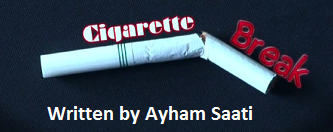
Cigarette Break by Ayham Saati filmed - post author admin

Cigarette Break (8 pages in pdf format) by Ayham Saati has been filmed.

Smoking can REALLY hurt you.

Watch it here!

Talk about it on the Discussion Board

Sunday, July 17, 2016

Original Script Sunday for July 17th - post author admin

Over on the Unproduced Scripts page are twenty two original scripts for your reading pleasure.

– Don

Wednesday, July 13, 2016

The Object of My Infection – Short Script Review (Available for Production!) - post author Zach Zupke

The Object Of My Infection
Warning: Adult Content
A CDC research scientist uses the only tools available to her to end an abusive relationship.

Richard Gere played one of the most menacing, hated police characters of all time in 1990’s “Internal Affairs.” With immense help from writer Henry Bean and director Mike Figgis, Gere crafted one of those rare performances where you actually sweat and squirm in your seat while you watch his slimy Dennis Peck lather in deceit, corruption and murder.

Writer David Lambertson has created a similar character in “The Object Of My Infection” with suspended police captain Drew Sanders, a foul creature with police badge tattoos on each bicep who “looks as though he belongs in a Deep South trailer park.”

Drew’s wife Emma is his opposite; a lab technician/scientist at the Center for Disease Control. From page one, the stage is brilliantly set with good (white coat and all) versus evil (a law man we surmise has twisted the law).

There’s no line Drew won’t cross or snort including infidelity, which he blames his wife for.

EMMA
She was here today? In our bed?

Drew doesn’t take his eyes off the television.

DREW
I don’t know what the fuck you’re talking about?

EMMA
I can smell her! I can smell what you did!

Drew takes a long sip of beer.

DREW
(far too casual)
Well, maybe if you weren’t so catatonic in the sack, I wouldn’t
have to be chasing stray pussy.
(beat)
It’s like fucking a corpse with you.

Emma screams at her coked-up husband to leave, throws house keys at him, nicks his cheek – and pays an all-too-painful price. His brutality includes several backhands to Emma’s face before dragging her to the bedroom for their first-ever sodomy session.

Bruised and permanently battered, Emma’s determined to end the vicious cycle despite Drew’s day-after promises to stop using and abusing.

Dangling at the end of her frayed rope, Emma eventually brings home a special treat from work for “Dear Hubby” – in the form of a white powder he thinks is cocaine. Naked on their bed, the only thing she wears is a bump across her stomach and Drew can’t resist, the last in a long line of his mistakes.

There’s no mistaking the quality of storytelling in “The Object Of My Infection,” which would have minimal budget. The biggest hurdle may be finding a location to mimic the CDC.

And finding a brave enough actor to take on Emma’s role.

Pages: 12

Budget: Moderate – except for a lab scene, the other locations are simple… with only two main characters (that better have great emotional range.)

About the reviewer: Zack Zupke is a writer in Los Angeles. Zack was a latch-key kid (insert “awww” here) whose best friend was a 19-inch color television (horrific, he knows). His early education (1st grade on) included watching countless hours of shows like “M*A*S*H,” “Star Trek” and “The Odd Couple” and movies like “The Godfather,” “Rocky” and “Annie Hall.” Flash forward to present day and his short “The Confession” was recently produced by Trident Technical College in Charleston, SC. He’s currently working on a futuristic hitman thriller with a partner and refining a dramedy pilot perfect for the likes of FX. You can reach Zack at zzupke “at” yahoo.

About the writer, Dave Lambertson: I took up writing rather late in life having already been retired before I put pen to paper (okay – finger to computer key) for the first time. My favorite genres to read and write are dramedies and romantic comedies.

In addition to this short, I have written four features; “The Last Statesman” (a 2015 PAGE finalist and a Nicholl’s and BlueCat quarterfinalist), “The Beginning of The End and The End” (a PAGE Semi-Finalist). Taking Stock (a drama) and a new comedy – “Screw You Tube”. Want to learn more? Reach Dave at dlambertson “AT” hotmail! And check out his website for even for goodies HERE! (http://dlambertson.wix.com/scripts).

READ THE SCRIPT HERE – AND DON’T FORGET TO COMMENT!!

FOR YET MORE SCRIPTS AVAILABLE FOR PRODUCTION:

PLEASE SEARCH SIMPLYSCRIPTS.COM 

OR THE BLOG VERSION OF STS HERE.

All screenplays are copyrighted to their respective authors. All rights reserved. The screenplays may not be used without the expressed written permission of the author.

Thursday, July 7, 2016

An Interview with Breanne Mattson – Writer of Warning Shot! - post author Anthony Cawood

Back in December, Breanne Mattson received word that Bruce Dern was signed on for her upcoming feature, a captivating thriller called Warning Shot. Well, several more names have surfaced since then. Including David Spade, and Darth Vader himself – James Earl Jones! Terrific news, isn’t it?

Well, even more terrific is that Anthony Cawood, had the opportunity to sit down and interview Breanne herself.

So, without further adieu, here’s what they discussed. Here’s a hint: read this one word for word. It’s fascinating – and informative too!

Q: Could you give me a little bit of background on how you got into screenwriting?

The short answer is I love movies and I love to write, so it just makes sense. Elaborating, I’ve been writing in some form or another since I was a kid. I grew up in a rural area where I often had to get creative to occupy my time. I did have access to music, movies and television growing up. For me, they were inspirational. They sparked my imagination. So I developed a love of the performing arts alongside my love of writing.

As for how I got into screenwriting specifically, I was booking musical acts for local events when I was approached by an independent producer about putting him in contact with musicians. He was looking for music for a movie. I took one look at the script and fell in love. I wondered why I wasn’t already doing that. So I started my first screenplay.

Q: You’ve been writing scripts for years, why screenplays?

There’s just something about screenplays that suits my personality. I love everything about screenwriting. The character development, the plotting, the visual nature of it, everything. It’s almost like needlework for the mind. I can say things or suppose ideas through an exploration of the human condition. It allows me to express my own empathy while providing an illustration for others, or to vent frustration while providing a method of catharsis for others.

Q: You work in TV, what is it you do and has it helped any with screenwriting?

I work in video production, mostly doing graphics. When you see the score change after a touchdown or a wrestler’s name appear at the bottom of the screen as he enters the arena, that’s me. It actually does help with screenwriting in some ways because it enables me to interact with all sorts of interesting people. I see behind the scenes at a lot of events and meet all sorts of characters. It can also be a lot of fun. I got chased around the ring by a wrestler once, for example. I’ve done a lot of cool stuff.

Q: Your first credit, at least according to IMDB, is the short Cobra Blood Cocktail, how did that get made?

The director contacted me through Simply Scripts. It wasn’t the first time someone had asked to produce one of my shorts, but it was the first time someone actually did it. It boosted my faith in the process.

Q: You’ve taken the role of Writer/Director on one of your shorts, Selfless, was this to maintain artistic control, expand your experience, or something else?

To gain experience, yes, but it also allowed me to be proactive. In 2009 I had a feature optioned by F. Javier Gutierrez and his then manager Richard Schwartz. Javier was on Hollywood’s International Watch List at the time for the feature “Tres Días” (which was changed to “Before the Fall” for American release). I was very excited and everything looked great, then the script languished in development for a year and a half. It was a wake-up call for me.

Around that same time, I had contracted to write a script for a development boutique. It was also very exciting, yet disappointing.

By 2010 I was depressed by the lack of progress with my career, so I decided to shift my focus. Instead of focusing on Hollywood, I decided to pursue independent film opportunities and just leave the door open for Hollywood. So in a lot of ways “Selfless” was a strange mixture of creative experimentation, learning the filmmaking process, and combating depression by doing something constructive. I was just trying to learn the process and develop some useful skills for the future.

Q: What did you learn from that experience and your subsequent shorts?

Too many aspiring screenwriters don’t understand how movies are really made and it’s problematic. A better understanding will not only make you a better writer, it will better equip you for a career in this business. Until you’ve gone through the basic process, including planning shots, scouting locations, casting, figuring out what the cast and crew will eat, or where they’ll go to the bathroom, or how you’re going to pay for it all, you really just don’t know what you’re talking about. Understanding these things will make you a more collaborative and contributing member of your team. And it will make you a better screenwriter. To me, that alone was worth it.

Q: Your short script, A Day with Death, was filmed in Africa and shown at quite a few international festivals, how did that come about?

The director found it through Shootin’ the Shorts. It’s another project helped through Simply Scripts. I’m very proud of it because it really demonstrates how simply writing something that explores the human condition can cross cultural boundaries. A filmmaker halfway around the world produced it and it went on the win the Viewers’ Choice Award for Best Short Film or Online Video at the largest film and television awards ceremony in Africa.

Q: Any other shorts in pre-production we should be looking out for?

Some filmmakers in New Zealand were trying to put “The End in Sight” together. I’d love to see that happen. I was looking at directing another one, but put it aside when “Warning Shot” started moving forward.

Q: Would you advocate writing short films, why do you think they are useful?

It’s interesting to watch the changing landscape with regard to shorts. They haven’t traditionally been known to make money and new ways are being found to monetize them. I haven’t personally put much stock in them in terms of returns, but my attitude is changing as I’m seeing new opportunities. At this point, I still think they’re generally more useful as learning experiences. They’re great for learning the basic filmmaking process, but that’s only if a writer chooses to get involved.

As for their usefulness toward making a writer a better writer, I think it depends on how you approach them. I generally focus on the same things I do with a feature. I consider things like character development and story arcs. If a writer ignores those things, then they’re really just purging. That’s okay, but I’m not convinced it will really prepare you for writing a feature. And I don’t think shorts are going to supplant features anytime soon. I hear a lot of people talk about the short attention spans of the current generation, but they say that about every generation. The current generation is quite capable of immersing themselves in something for a couple of hours. Movies and video games prove it.

Q: Did you start with short scripts and then move to features?

I jumped right in and wrote a feature first. It was terrible. My second feature was a monumental improvement. It was like the difference between Metallica’s “Kill ‘Em All” and “Ride the Lightning,” if “Kill ‘Em All” had been awful instead of awesome. It was like they were written by two completely different people. I only write shorts if I can fully exploit the ideas of a story in a short span or if the idea of a feature feels anaemic.

Q: When it comes to feature scripts, how do you approach structure in your scripts? Do you follow any particular method?

I try and keep structure very basic. I’m of the mindset ‘simple story, complex characters.’ I believe in letting characters complicate a story. With plotting and structure I only need a basic framework for the characters to operate in. I generally use the three-act structure with the second act divided into two halves. I do like a midpoint, so in that regard I guess you could say I use a four-act structure. I use the same major plot points most writers are familiar with.

Good plotting will camouflage any structure in much the same way strong three-dimensional characters will camouflage any plotting. That’s why I focus so much on characters. I understand they’re the key to a successful story. Everything I write, no matter how much action may be in it, is ultimately character-driven.

Q: What was the first feature you wrote and how did you get it out there? Did you query Producers, enter competitions, use Inktip, etc?

I don’t recall the first feature I ever queried a producer about. It wasn’t the first one I ever wrote, but yes, I queried producers and managers. I also tried places like Inktip, yes. I didn’t find any of it to be all that effective. I didn’t really try a lot of competitions until later. I haven’t generally found them to be all that effective either. The most useful thing about competitions – particularly if you’re fortunate enough to place in a major one – is that it can give your script a little more credibility.

Now this is just my personal view – and I know it diverges from that of the average up and coming screenwriter – but I don’t really think about things like getting a manager or agent. If that happens, it will happen during the course of what I’m doing. I stay focused on getting movies made. I think shifting my focus to independent film was the best thing I ever did. It allowed me to stay busy and feel productive. I’ve interacted with producers, actors and and crew. It’s been very healthy for me as a writer. A lot of people fail to recognize or appreciate the resources they have available outside Hollywood. Even right there at the local level. It’s a lifeline, it really is.

Q: Your features have done really well in some of the most prestigious competitions (congrats!), did you receive interest from agents/producers afterwards?

Thanks! From producers and managers, yes. Not so much agents. Managers and producers seem to create a bit of a buffer between writers and agents. I had what they call a hip pocket deal with a manager for a time, but it’s hard to find someone who wants what you want.

It’s important to keep in mind that Hollywood is a place, not a person. I know for a fact there are people in Hollywood who want to make great movies. They care. They do. They just don’t always have the power to get things done the way they want. There’s this mindset among a lot of people in this business that everything has to go through this development process where it’s supposedly improved. Even if it’s not.

We always hear how ninety-nine percent of scripts are terrible, but what a lot of people don’t understand is that it’s not just a writer thing. Producers, managers, development people, executives and investors can all have terrible ideas. I’ve been involved with quite a few projects by this point that looked like they might go somewhere, only to watch them fizzle. It’s a heartbreaking business.

The trick is to find people whose philosophies align well with your own. I’ve found working with people who don’t get what you’re about to be futile. That’s why I like working with people like Dustin (Fairbanks) so much. He’s made sacrifices to maintain his integrity and I respect that about him. I believe in Dustin and have a fierce loyalty to him. It’s refreshing to find somebody like that in this business – and worth the long hard road to get there.

Tying this back to your question, I think it’s more important than anything (besides writing a great script) to get out there and work in the business in any way you can. Meeting people and networking will almost always prove more fruitful than competitions or queries. And you’ll feel better about yourself. I cannot stress this enough.

Q: People may have heard the term ‘hip pocket deal’, but what does it mean/involve?

Basically, it means a manager or agent is representing you or your work without a contract. They operate in the same capacity as your manager or agent though you’re not an official client. If your script sells, typically you would get signed. It also allows a manager to get to know a potential client better before signing them. That works out well for the client, too. You can make a clean break if a potential manager isn’t working out for you.

Q: What are your thoughts on screenwriting competitions in general?

I think they’re fine as long as you maintain perspective and don’t get carried away. They can be fun and eye-opening experiences, but there’s very little chance a competition is going to launch your career. I was sparing with them and stuck mostly to the top ones. I wouldn’t advise spending a lot of money on them. You’d be better served putting that money into a movie.

Q: Your feature script, Warning Shot, is currently shooting and I believe you’ve been on set too… how did it get picked up?

It was a Nicholl quarterfinalist in 2011. Managers and producers said it was great, but it seemed nobody wanted to do anything with it. Managers I spoke with wanted to use it as a sample to try and get assignment work. Most producers wanted me to write something based on someone else’s idea as well. They liked my character development and wanted me to help create characters for their own projects. I reread the script one day and felt it was being overlooked. So I put it back on the market. It received a positive review over at the Scriptshadow website. That’s how I met Dustin.

Dustin deserves a lot of the credit. He’s the one who went out there and made the connections who could get the script into the hands of known actors. Bruce Dern signing on was really a turning point. That’s when people started taking us more seriously. It’s a bit like that scene in “Raiders of the Lost Ark” where the villain Belloq is walking with the Nazi officer and talking about how he followed the directions on the amulet. He looks over and sees Indiana Jones and Sallah digging with a crew and realizes something is going on over there. People started noticing that this little low budget indie picture was attracting names.

Q: What can you tell us about the script?

It’s a hostage thriller. The main character is a single mother trying to take care of her daughter on a limited income. When they’re both taken hostage by a couple of men sent by her grandfather’s business rival, she’s placed into the most vulnerable position imaginable. She’s completely helpless and has to try and protect her daughter at the same time. One of their captors is extremely dangerous and unpredictable. He enjoys tormenting people, psychologically as well as physically. It utilizes a common theme in my work – the power of one. The nobody everyone thinks they can walk over who has to find it within themselves to stand up and fight back.

It’s very character driven. Instead of getting bigger, I went deeper. It’s a mistake to think a movie is less just because its budget is smaller. This script allowed me to say things I’ve wanted to say for a long time. I got to explore the human condition on a level that’s harder to delve into when the plot is thicker. I was forced to push my creativity. I think low budget storytelling is actually more challenging than big budget. It’s much more difficult to create a sense of progression when your options are so limited. The good news is that it really helps with creating a sense of genuineness when a character’s options are limited.

Q: It’s got an incredible cast, including Bruce Dern and James Earl Jones, how has it been working with such stars on your first US feature?

It’s been surreal. I was stunned when I heard the names of the actors who were reading my script. Stunned. They were huge. I’m at a loss trying to express the feeling of being told Bruce Dern or James Earl Jones or David Spade is reading your script. And then to have a producer call you and say they’re going to do it. It’s almost impossible to describe.

Bruce is incredible. He’s a living legend. You just aim a camera at him and he does his thing. That voice. That inflection. He’s like a hurricane. He tears it up. You just have to film it and figure out later how to minimize the loss of any of that gold. I don’t envy the editor trying to decide what material to cut in the wake of a Bruce Dern performance.

James Earl Jones is, of course, movie royalty. He’s such an amazing talent and an incredibly nice person. I was standing by the monitors with a headset on and watching him on set when he said, “Where’s the writer? Is the writer here?” Imagine that in James Earl Jones’s voice. I was awestruck.

David Spade is huge in the world of comedy. I really feel honored that he chose this project for a rare dramatic part. And he did a fantastic job. He really got the character. And he’s a really nice guy. And hilarious. Just listening to him between takes had me dying laughing. Bruce is also very funny. David and Bruce together were killing me.

The first time I heard Tammy Blanchard might take the lead, I pushed for it. I think she’s amazing. And she was every bit as awesome as I knew she would be. Her talent is a sight to behold, let me tell you.

Frank Whaley is also an amazing actor. Watching him work was just jaw-dropping for me. He’s such an artist. I believe he’s an acting genius.

Onata is one of the best child actors I’ve ever seen. I mean that. Child roles can be scary. You have to wonder about a child’s ability to capture a character in adult situations and you worry about the effect it might have on them. Onata killed it. And concerns about the effect were unfounded. She shrugged off the intensity better than a lot of the adults (laughs).

Then there’s Guillermo Díaz and Dwight Henry. They had a great chemistry together and played off each other so well. Guillermo is a really nice guy in real life, but he’s so creepy and scary on screen. There are a lot of nuances in his performance. People might miss a lot of them the first viewing. I love that kind of stuff.

Dwight is a terrific natural actor. He’s just got this special something. An x-factor. He’s super nice in real life, too. Always a smile and always so positive. He’s also a baker. He brought some of his buttermilk drops to set one day and went around handing them out to people. Such an amazing person.

The whole cast and crew were all just so wonderful. I couldn’t have asked for more. I’ve got lots of stories to tell. Too many to write up right now. Maybe I’ll do a Q&A or a sit-down interview someday and tell some of the stories.

Q: So how different is the shooting script for Warning Shot, compared to the Nicholl script?

Oddly, it’s still relatively close. There were a lot of changes, but the basic story itself held up.

Q: And are these changes driven by you, Dustin, cast… All of these?

They come from everywhere, starting with producers. It seems like everyone wants to make changes. I was fortunate to have a director who wanted to minimize unnecessary changes. Dustin still won’t tell me all the change requests because he says I’ll flip out (laughs).

Some changes are out of necessity. During casting, I sometimes changed things to court particular actors, then changed them back if the actor passed. One character was changed from male to female and back again. One character’s ethnicity changed. A couple of characters were expanded to give bigger actors more to work with. So casting drove a lot of changes while it was being packaged.

The script changed during production sometimes, too. Location constraints might require a rewrite to compensate. A small rewrite might be necessary to fix a continuity error. And, of course, there are the actors. Sometimes rehearsal reveals things that need to be addressed in the dialogue or action. Action can usually be addressed with blocking, but the dialogue sometimes needs to be trimmed or rewritten. I found out one evening around 6:30 I had to rewrite a scene that was going to be shot first thing the next day. I had to get it done before I went to bed because sides were going out the next morning. That’s the kind of situation writers can find themselves in on a movie set.

Q: Anything you’ve learned from the experience? And anything you’ll change in future scripts because of it?

Some things, yes. There’s a distinct point where you realize your script isn’t yours anymore. I remember looking around one day at all the cast and crew working so hard and realizing that all these people represent all that I’m unable to do on my own. It’s humbling. It takes so many people and they work so hard every day. And for such long hours. They give so much of themselves. It’s so much more than one person could ever do. I thought to myself what foolishness and arrogance it is to perceive a script as purely your own.

More practically, I see things I can do to make people’s jobs easier. In the future I’ll look more at the timing in scenes and the relationship between the dialogue and the action. I’ll also be more mindful of some technical things like abbreviated scene headings to ensure they’re unique enough that they can’t get confused with other locations when the script is broken down.

Q: What’s the release plans/schedule for Warning Shot?

We’re shooting for festivals next year. We’ll have to see what kind of distribution deal we can get. It’s a little too early to set a specific date.

Q: There are a ton of people out there who offer coverage services, position themselves as gurus etc, what’s your view on such services?

I generally think if a script consultant can be an expert on screenwriting, why the hell can’t a screenwriter? Why can’t I be the expert? I don’t buy the logic that a writer is “too close” to their work to see its flaws. That excuse works early on, as you’re learning the craft, but it’s entirely possible for a writer to develop the ability to objectively scrutinize their own work. I don’t get writers who think they will forever need someone else to tell them whether or not their story works.

Writers have to be able to know what works and what doesn’t work in a story. That’s the real talent. If a screenwriter doesn’t have that ability, I don’t see much of a future for them. If a script consultant does have that ability, I don’t see what’s stopping them from being the writer instead of the consultant.

I do think there’s a place for script coverage when it comes to readers helping producers find projects. If a reader is levelheaded and acting in the best interest of the producer, they can really help a project get off the ground. If it’s a jealous writer who really has no motive to see another writer succeed, then they can kill a project. I think too many producers put too much stock in the opinions of consultants, but it’s because I’ve seen the damage they can do. I’ve had producers think a script was wonderful, only to see their confidence wane when a consultant was negative. I don’t understand how a producer can be so excited about a script and then have so little faith in the writer. It seems strange to me that someone would value a consultant’s opinion over that of the writer who wrote the script they love.

I realize you’re talking about services and not the consultants hired by producers, but my opinion of consultants who sell their services directly to writers is essentially the same. If the consultant knows what they’re talking about and has the writer’s best interest at heart, then they can help a writer improve. If not, they’re really just taking your money. At some point, however, writers need to reach a level of competence where they don’t need that anymore. They should know when a story works. They shouldn’t need anyone else to tell them.

This gets back to working with the right people. I care more about what Dustin or the actors think than any consultant. We’re the ones making a movie together.

Q: What are your thoughts on the business side of screenwriting, getting your scripts ‘out there’ and networking to make connections?

I think it’s crucial. It’s important that the writer does that or has someone advocating for them who can do it more effectively. I don’t think a lot of aspiring writers realize how many people a script is going to have to excite in order to get a project off the ground. Your script is going to have to inspire a lot of people for a long time. There are so many points where everything could just fizzle.

This is why it’s so important that writers have something to say. People latch on to things that mean something to them. One of the first things Bruce Dern said to me was about how his character resonated with him. Producers, actors, investors, all these people have to see something in your script that moves them to want to see it through.

Q: If you’ve used services/sites like Inktip, SimplyScripts, The Blacklist, what’s your view on this type of model for screenwriters to get their scripts seen, and hopefully picked up?

I’ve said this before, but I really think Simply Scripts is the best stomping ground on the internet for up and coming screenwriters. It’s a trial by fire and it’s free. Only at SS can any writer, regardless of their background or how much money they have, put their work out there to sink or swim on its own merits. There are other great sites for screenwriters, but a lot of them insulate new screenwriters from direct unfiltered criticism.

Other sites only allow a few pages or have some sort of selection process. Or charge. At SS you can post entire screenplays for public consumption for free. If you choose to participate, people will notice and you will get read. And you will get skewered. And you will become a better screenwriter. You will work to succeed or you will fall by the wayside. The way it should be.

I’m speaking about becoming good at it. As far as getting picked up, that’s a different thing, That’s business. There are success stories, but we don’t see what’s going on behind the scenes. We don’t know how much any particular site had to do with any script’s success. From a creative standpoint, I think SS had a lot to do with my development. From a business standpoint, I definitely think it has a lot more to do with just not giving up. I just kept pushing until I connected with the right people.

Q: What screenwriting projects are you working on now and when can we next expect to see your name on the credits (other than Warning Shot)?

Right now I’m planning to work with Dustin again on another project. We work well together. I’ve got several projects I hope to get off the ground in the future. We’re both always looking at what we can get done.

I also field writing assignments, but I only accept ones that really excite me. I’m not interested in anything that doesn’t allow me the opportunity to write something amazing. I’m also not interested in convoluted development processes that impede my own natural writing process. I want to feel good about what I write.

Q: What’s the best and worse screenwriting advice you’ve been given?

The best advice is to write. You have to do the thing you hope to become good at. There are no shortcuts. Until you’re good at it, you don’t have much of a chance. If you’re good at it, you have a chance (assuming you’re willing to work hard and put yourself out there). That’s about as simple as it gets. Other good pieces of advice are to have your own voice, focus on a great story, or read other scripts, but I think to just write is the best.

The worst? Hmm. This might be controversial, but I think the pursuit of perfection is stupid. Yes, I just said that. Perfection is a stupid goal. It’s vague undefined bullshit that has no real meaning in the real world. Storytelling is like a ramp. There’s a pinnacle. It’s not perfection, but it’s as good as it can get. The only options left are to go backward or over the edge. Any changes from that point on are either inconsequential or they screw up the script in some other area. I mean, you can stabilize a bicycle wheel with a second axle but now the damned wheel won’t turn.

It’s a bit like, “Write because you love it.” What vague and useless advice. Of course I love it. Only an idiot would write if they didn’t love it. I write because I want to make movies. It’s implied that I love it. Screenplays are meant to be produced. I want to reach out to people. To hold a mirror up to the world. Making an impact is what I love.

Another shitty piece of advice that I hate is, “Writing is rewriting.” If that’s really how you feel, then I think you should quit. A lot of people in this business want to reduce the writer to the dull tedium of the craft. I say to hell with that. Rewriting is writing. It’s all writing. Love it all. That’s not intended to be a jab at Hemingway – who was a much better writer than I’ll ever be. I just think that once a writer accepts rewriting as a part of the total process, they’ll be a lot happier. It’s possible Hemingway meant essentially what I’m saying and the adage has morphed into something he didn’t intend. Regardless, I think the suggestion that writing should be tedious is bad advice.

Now for a few ‘getting to know Breanne’ questions

Q: What’s your favourite film? And favourite script, if they’re different.

I don’t really have a favorite. I love so many movies, from every genre, throughout the whole of movie history. I’m still going through the classics. I just saw “The Maltese Falcon” for the first time within the last year. If I had to pick one, it would probably be something like “Fargo.”

It’s the same with screenplays. I’ve read so many. “Spotlight” is the last one that stuck with me.

Q: Favourite author and book?

I’m a huge fan of murder mysteries. I can’t get enough of them. I love Agatha Christie. “And Then There Were None” is one of my favorite stories ever.

Q: Beer or Wine (or something else)? And which variety?

Wine. Red. Pinot noir is my favorite. Not much into beer, though I’ve been known to have one on occasion.

Q: Favourite food?

Hmm. I guess spaghetti or lasagna or something. I’m a picky eater. I generally like things plain and I’m one of those people who doesn’t like my food touching. And I hate when people try to get me to eat something I don’t want. People use sight and smell to choose food too, you know.

Q: Any other interests and passions?

I play the guitar. I’m not great at it, just okay, but I find it meditative. I’m also a black belt in Karate. That’s really useful for fight scenes. I also dabble in magic and illusion. I stink at it, but I often find the con artistry techniques useful for making a character appear clever. My husband and I like to take road trips. I find traveling inspirational. I just walk into an interesting location and start imagining all the exciting scenes that could happen there.

Q: You live in Salem, BUT not that one… do you ever get confused tourists?

Not that I’m aware of. We’re on opposite ends of the country from that other Salem. Maybe that helps people separate them.

Q: Any final thoughts for the screenwriters of SimplyScripts?

I don’t think a lot of aspiring writers understand how much they’ll have to write in order to have a career as a screenwriter. It’s a lot. I meet so many aspiring writers who are having trouble with that first script. I tell them to just do it. Just write it. Write the best script you can and let your work speak for itself.

I also think too many writers try and imitate what’s currently hot or trendy. It’s true you can never be completely original. You’ll always be a product of your influences. But all you have to separate yourself from that vast sea of writers out there is your voice. Never sacrifice the thing that makes you unique. Never let anyone get you to give up your voice. Originality is almost impossible, no matter how hard you try. Uniqueness is almost certain, unless you avoid it.

About reviewer Anthony Cawood: I’m an award winning screenwriter from the UK with over 15 scripts produced, optioned and/or purchased. Outside of my screenwriting career, I’m also a published short story writer and movie reviewer. Links to my films and details of my scripts can be found at http://www.anthonycawood.co.uk.

About the writer: Breanne Mattson is no stranger to accolades.  Her feature lengths have made Nicholl Quarterfinalist three times (yeah, that’s three times, beeyotch!) She’s also made semi-finalist in BluecatFinal Draft and honorable mention in TrackingB.  She’s also received a “worth the read” from Scriptshadow.  Her website can be viewed at www.breannemattson.com (IMDB credits here.)

Wednesday, July 6, 2016

Jessica’s Window – Short Script Review (Available for Production) - post author Dane Whipple

Jessica’s Window
What secrets lie in the attic?

From a dusty and barren attic, thirteen-year-old Jessica Campell watches as her father packs their belongings into a U-Haul van. Tears stream down her face.

Her father, Mark Campell, is obviously no stranger to heartache himself. The dark circles under his eyes reveal he has spent many a night awake, nursing a hidden pain.

As Mark and his wife Laura make final preparations to depart, Jessica pounds relentlessly on the attic window, calling desperately to her parents. But no matter how hard she pounds or loud she cries, her parents can’t or won’t listen. Slowly, they drive away.

But despite being imprisoned, Jessica soon discovers she’s not alone. In the shadows of the attic, she’s met by eleven-year-old Sarah Meyers, a waif of a girl who assures Jessica things will get better. The two of them – she claims – will be good friends. But Sarah’s words are less than reassuring. As police cars and a news crew gather outside, Jessica’s concerns continue to grow.

What could have made Jessica’s parents leave her behind? Soon after the two meet, an eerie presence starts to stir… Just what is happening? Are these children even alone?

A surreal emotion-driven supernatural narrative in the vein of The Others and The Lovely BonesJessica’s Window is a suspenseful, masterfully-written drama. The script manages to land an array of emotional punches, each one landing harder than the first. All of which culminates in a surprise final twist that will leave audiences speechless.

Audiences and critics will be hooked from the get-go. It’s exactly the kind of impassioned, poignant, character-driven drama that reaps gold on the festival circuit.

So directors – act fast. This one won’t be gathering dust in the attic for long.

Pages: 5

Budget: Medium. Suburban setting, police cars, and a news crew.

About the Reviewer: Dane Whipple something, something Danger Zone. He is currently working on that screenplay everybody keeps talking about: The Wild Age. Contact him at dane.whipple (AT) live.com

About the writer, Marnie Mitchell Lister: An award winning writer AND photographer, Marnie Mitchell Lister’s website is available at brainfluffs.com. Marnie’s had multiple shorts produced and placed Semi-final with her features in BlueCat.

READ THE SCRIPT HERE – AND DON’T FORGET TO COMMENT!!

FOR YET MORE SCRIPTS AVAILABLE FOR PRODUCTION:

PLEASE SEARCH SIMPLYSCRIPTS.COM 

OR THE BLOG VERSION OF STS HERE.

All screenplays are copyrighted to their respective authors. All rights reserved. The screenplays may not be used without the expressed written permission of the author.

Tuesday, July 5, 2016

Saved My Bacon – Short Script for Review (Available for Production!) - post author Dena McKinnon

Laptop-Shorts

Saved My Bacon

It’s 1913 and a big city reporter travels out to the country to meet The World’s Greatest Pig.

 There will always be a place in storytelling for rural tall tales. Big Fish did it quite successfully. And it’s easy to see why.  There’s something about combining the honest simplicity of “down-home rural folk” with fanciful humorous stories that simply works.   (And really beats Deliverance when it comes to telling country stories by the campfire…)

Saved My Bacon comes straight from that pedigree (Big Fish… not Deliverance.)  Featuring only two main protags, it follows the story of Milo the Reporter who’s come to interview Farmer Davis… a simple man with an extraordinary pig.  The result is pure Mark Twain – a sweet narrative, with a very effective ending.

Running only 5 pages long, this is a perfect script for anyone interested in telling a solid, amusing tale.  As long as you have access to Wilbur for the shoot…

About the writer: Tim Westland, co-writer of the acclaimed graphic novel Chasing the Dead, received first place for Balls Out in the NNYM 15 page contest. A moderator at Moviepoet, he’s an outstanding writer with an eye for the details. His IMDB page can be found here.

Pages: 5

Budget: The vast majority of this script is low budget.  Two protags, one room and a single rural exterior shot. The one – er – stumbling point is that you have to get a pig – and do a little FX for its legs.  But when you get that, this one’s golden!

READ THIS SCRIPT HERE – AND DON’T FORGET TO COMMENT!

FOR YET MORE SCRIPTS AVAILABLE FOR PRODUCTION:

PLEASE SEARCH SIMPLYSCRIPTS.COM

OR THE BLOG VERSION OF STS HERE.

All screenplays are copyrighted to their respective authors. All rights reserved. The screenplays may not be used without the expressed written permission of the author.

Search with Google

    Custom Search SimplyScripts

Award Season Screenplays - New!

ScriptSearch

Advertisement

Script of the Day
January 1, 2026

    The Girl on the Screen by Brandon Matthis

    A quiet night takes a horrifying turn when a woman’s TV displays a missing persons poster, pulling her into a sinister urban legend. 10 pages
    Discuss it on the Forum

    *Randomizer code provided by Cornetto.

More Navigation

Search Amazon

    Search Now:
    In Association with Amazon.com

Featured SimplyScripts Blogs

Advertisement

Latest Entries

Categories

Donate


Writers I dig


SimplyScripts Logo

Comodo SSL