Olga Tremaine’s script A Bike (Short, Drama – 6 pages pdf format) has been produced.
A young man sells his old bike, only his transaction is not what he expected.

|
Welcome to SimplyScripts A database of hundreds of downloadable scripts, movie scripts, screenplays, and transcripts of current, classic and maybe a few soon-to-be-released movies, television, anime, unproduced and radio shows. A screenwriter's resource. See below for what is new on the site or click on a script category! - Enjoy! I'm not ignoring you. You just need to check your spam folder. |
Olga Tremaine’s script A Bike (Short, Drama – 6 pages pdf format) has been produced.
A young man sells his old bike, only his transaction is not what he expected.
Over on the Unproduced Scripts page are forty original scripts for your reading pleasure.
Happy Mother’s Day.
-Don
You’ve Finished the Damned Script – Now What?
(Anthony Cawood Primers for a Networked World)
Part 6: Options, Sales and Production
A few people have asked me recently how I manage to sell and option so many short scripts.
My response? I usually laugh, and get embarrassed (what can I say – I’m a Brit!) Anything to move the subject along.
Others have shared their experiences of optioning/selling scripts, and their frustrations regarding what happens next. Or as is often the case – what fails to happen next.
As a result, I thought it would be useful to take a look at both sides of the coin, and share my personal experiences. Note: In this article, I’ve strived to be as ‘full disclosure’ as possible without discussing individual deals. And please keep in mind, this all relates to my experience only. Your mileage may vary.
Sales and Options
According to my calculations, I’ve written 30 short scripts over the space of just shy of 2 years.
19 of them are currently sold, or under option. I say ‘currently’ because I’ve got an additional 6 shorts where the options have technically lapsed. So you could argue the number’s 25.
I’ve also written three scripts specifically at someone’s request. Only one of those has actually made it to fruition. In the other two cases, the “commissioner” of the script proved unable to move the project forward, leaving me with the unproduced work. One of those has since sold to a different producer.
Let me clarify what I mean when I use the terms Sales or Options. Trust me, I have my reasons.
Sale: Someone buys the script outright for money. And a contract exists to formalize that.
Option: Someone agrees to try and pull the resources together to make the script within an agreed-upon window – normally 6-12 months – with agreed payment to follow.
A further note regarding options: these are usually offered by newer producers or directors (sometimes students) who don’t initially have funds available… or just want to ensure they can get the project off the ground before sinking capital into it. Any agreed payment for such deals is often only a percentage of the profits the short may make, rather than a defined monetary amount. This type of deal is often called a Free Option.
Sales have $$ paid up front. A couple include bonus $$ upon start of production, things of that nature. Note: Whenever I can, I make a point to obtain a percentage of the profits on the backend as well. Shorts usually make no profit at all. But I want to be included in case it goes viral, or blows up some way!
When talking with a Producer or Director, I ask if they have a budget for purchasing the script, then go from there. Why? Because I strongly believe a writer’s work has value. We spend time, effort and emotional energy on every script we create. So we deserve to be compensated when it’s possible.
Contract and agreements, I tend to play by ear. Some people will disagree with this strategy – and I do wish to stress I only do this for shorts.
When payment is involved, there’s usually a contract. I don’t use a lawyer or agent – just my common sense. Knock on wood… it’s worked. So far!
With options, I email an outline of my terms to the producer, and make sure all parties are in agreement on the terms.
A quick note when it comes to both types of agreements (both email and signed): don’t be scared to ask for anything you consider right and fair. And never be afraid to say no, if you’re not comfortable with a deal.
As to what contracts contain: that’s always different! Usually, they’re drafted by the Producer/Buyer. On a couple of occasions, I’ve been asked to supply them. In those circumstances, I just retrofit one I’ve already got. If you don’t have one on hand, Googling for templates also works.
For me, the essential elements are these:
Pre-production Frustration
I recently shot the short “Txt M” from my own script – precisely due to frustration with how long it can take films to get made!
So for those who’ve sold/optioned scripts and now wait in limbo. Please believe: I feel your pain
But in the end, there’s very little you can do. Producers and Directors are not doing it to you on purpose (as much as it may seem that way!). No, there’s a whole host of reasons it can take awhile before an optioned script goes into production.
Of course, none of those reasons make the process any less frustrating… however how valid they may be. My advice. Patience is a virtue. Practice it. Often and wisely.
As a side note: it’s often interesting to see how willing or unwilling the film maker is to involve you in the process. In my experience, I’ve had audition tapes sent to me for my review. Rewritten scenes as required. Advised on prop selections, etc. Even if the producer prefers you take a ‘hands off’ approach, there’s no harm in letting them know you are keen to work with them, if desired, so as to better understand the process.
Post-production
But once a script is finally produced, everything comes up roses.
Right?
Well kinda. But not really. Among other things, one learns about (drum roll)…
Post-production.
Post-production is where a lot of the magic happens. Film editing. Sound effects. Colour adjustments. Music, titles, credits. And more.
Needless to say, that can take awhile. So you’ll need to practice your patience again.
Please don’t interpret any of this as a complaint. If I didn’t think it was all worth it, I wouldn’t have written 30 shorts and 2 features. I’d have found something to do with more instant gratification.
But it’s good for writers to be aware of the potential bumps in the road. Factor them into your expectations.
Thank God – The Damned Thing’s Filmed!
Yes, that day has finally come. You’ve been sent a Vimeo link, or a DVD of your film. Now you can relax and soak in compliments from your jealous friends.
Right?
Well. Sorta. But then you watch the film – and your over-critical ID chimes in.
Because, unless you directed and edited the final movie, it’s very, VERY likely it won’t be exactly the same as what you envisioned in your mind’s eye.
Reasons for changes are unending. Budgetary concerns. Dialogue can be altered. Casting may not be your taste.
And make no mistake – there’s nothing you can do about it… unless you morph into a director, and insist on making scripts your way.
So focus on the positives!
As a result, you’re now watching something that has your name in the credits. You’re a produced screenwriter, which is no small achievement. No matter how arduous the journey was.
As for my own stuff? Well, I keep plugging away, and will broach every opportunity to push and promote my scripts. But there’s no magic involved. It’s just an established plan that’s worked for me. So far:
And the result? Out of my 19 scripts, 3 have been produced and are watchable (links available on my site.) 2 are in post production (I’m hoping to see them in the next 2-3 months.) 8 are slated to start production six months from now. The rest, further out than that. And I have a feeling that as least another 2-3 will end up as lapsed options. Sad as that may be…
And speaking of future predictions: I’ve started to concentrate on Feature scripts. Which means going through all the pain, agony and frustration all over again. But in new and interesting ways.
I’ll keep STS posted. Perversely, I’m looking forward to it!
About Anthony: I’m an award winning screenwriter from the UK with over 15 scripts produced, optioned and/or purchased. Outside of my screenwriting career, I’m also a published short story writer and movie reviewer. Links to my films and details of my scripts can be found at www.anthonycawood.co.uk.
Over on the Unproduced Scripts page are twenty three original scripts for your reading pleasure.
– Don
 The New York Women in Film and Television Writer’s Lab for Women Over 40 brings 8 women screenwriters over the age of 40 together with established mentors from the film industry for an intimate gathering and intensive workshop at Wiawaka Center for Women on Lake George, NY from September 18-20, 2015. The Lab is presented in collaboration with the Writers Guild of America, East. Read more about the background here.
Please read The Writer’s Lab Application Instructions for details on eligibility. At a high level: Applicants must be women who were born on or prior to June 1, 1975, and must be US Citizens or Permanent Residents. The Lab seeks submissions from all racial, ethnic, socioeconomic, and cultural groups. Submissions must be full-length narrative screenplays in English. (No TV scripts, shorts or documentaries.) They are seeking a broad selection of screenplays across all genres of fiction. Scripts by more than one writer will be considered, but all writers must be female, and only one writer can attend The Lab.
There are a lot of women writers who are members of SimplyScripts and I can’t think of one who hasn’t produced quality, professional and engaging work. And, I know that all members would be delighted to lend any assistance in the way of reviews and proof reading to help our their friends on the discussion board.
Over on the Unproduced Scripts page are twenty two original scripts for your reading pleasure.
– Don
You’ve Finished the Damned Script – Now What?
(Anthony Cawood Primers for a Networked World)
Part 5: Competitions
I decided to enter a few competitions last year with some of my short scripts… And quickly discovered that, as screenwriters, we are spoilt for choice. There’s hundreds of contests out there, with new ones starting every year. So which ones should you be entering, and spending your hard earned money on?
When all was said and done, I collected one 1st place, one Runner’s up, a Third, a Finalist and one Semi-Finalist placing. (In the interest of full disclosure, I also entered five more scripts that got absolutely nowhere. Nada. Zilch!) But I did gain knowledge and experience in the process – and that’s valuable as well.
But, let’s back up for a moment and ask one important question… Exactly why do you want to enter competitions in the first place? For me, it was reasons 3 and 4 from the list below. But different competitions offer different opportunities. It’s important to define your goals at the very start, in order to plan proper strategy. Do you want to:
Let’s consider these motives, one by one.
1) Obtaining an Agent, Manager or Producer
There are only a handful of screenplay contests that will consistently get you this level of attention – and then only if you place semi finalist or finalist. These are the big players in the game: The Academy Nicholl Fellowship, Page Awards, Scriptapalooza, BlueCat, and a handful of others (that I have less direct experience with.)
But remember – if you’re angling for these big fish – these contests attract thousands of entries. Competition will certainly be fierce!
– Page has been around for over 10 years and has a $25,000 First Prize. In 2014, it was won by Matias Caruso, whose shorts have been showcased here on Moviepoet, SS, and in STS.
– Nicholl has been around even longer – thirty years and receives over 7000 entries annually. Up to five winners can receive $35,000 fellowships.
– Scriptapalooza has been in the game over 17 years, receiving over 4000 entries annually. One major plus: the judges are all agents, managers or producers and the first prize is $10,000.
– BlueCat has been around since 1998, attracting over 4000 entries per year. This one boasts a $15,000 grand prize (and $10,000 for the winning short too!)
Not to mention other high profile comps, like Final Draft’s Big Break, Script Pipeline, Austin Film Festival Screenplay Competition, etc. Score big with one of these, and your feature, short or TV pilot could connect with the ‘right’ people.
2) Get coverage
You can get coverage from a variety of sources – from the free opinion of people right here on the SS boards, to shelling out hundreds of dollars for professional readers (of varying quality.) You can also get it as a result of entering some screenplay contests – which is sometimes packaged as part of the entry fee. Bluecat does that. So does ReelWriters. So when you are contemplating a competition, research if they do a coverage package – and determine if that’s useful for you.
3) Win something
Prizes range all over the map: nice trophies. Free software, discounted services… all the way up to some pretty substantial monetary prizes. Check out what the competition you’re considering offers – and if it’s something valuable to you. IE: is it worth spending $30 to enter a competition for a copy of Final Draft 9, if you bought a copy recently? Probably not – if that’s all that a win will mean.
4) Award winning screenwriter bragging rights
Does this matter? Well, if it’s Page, Nicholl, etc – then yes, it probably does. As for the others… Well, here’s how I think about it personally. When trying to persuade producers/directors to read your scripts, I think ‘award winning’ may help get your script read. (And maybe even read first.) It may also be something a producer might be able to use while marketing your work. I’ve never heard anyone say it’s a bad thing. Though you have to balance that against the cost of multiple entry fees!
5) All the above (or any combination)
Hey – wouldn’t it be grand to win a competition and really score? Get the prizes, the coverage, the bragging rights – and have your work seen and produced? Well, one can definitely dream. And if you back it up with hard work… those dreams do sometimes come close enough to reach…!
Researching Competitions and Lists
Okay – so you’ve decided competitions are worth a try. But if you’re not ready to tackle Nicholl, where can learn about the smaller fry? Here are a few handy links that I’ve used in my searches – complete with details on submission requirements, deadlines, etc…
1) Movie Bytes – http://www.moviebytes.com/
2) InkTip – http://inktip.com/competition_directory.php
3) FilmFreeway (Film Festivals too) – https://filmfreeway.com/
4) Without A Box – (Film Festivals too) – https://www.withoutabox.com/
* It’s worth pointing out that some Film Festivals – like Austin, Nashville, etc – have screenwriting comps within their festivals. Getting into the finals of these often includes free passes for the festival as well.
Finally, let’s end with a few tips – garnered both from my own experience and common sense:
1) Thoroughly research any competition you are thinking of entering. How long has it been established, who runs it? Are there any complaints online? If you have serious doubts… spend your money elsewhere.
2) Does it have a genre bias and does any bias fit with your script(s)? If so, use this to your advantage.
3) Does it offer different categories for scripts, e.g. Drama, Horror, Comedy? In general, the more categories the better. That means that your horror opus won’t be competing against indie dramedies. (Especially good if you get a reader whose favorite film is Juno!
4) Do all scripts have to have a certain theme? I found an Australian comp where all the films had to involve dogs!
5) What can you afford? Competition entries can mount up fast. Always spend wisely. Look for discounts via sites like FilmFreeway and MovieBytes. And take advance of early entry discounts, too.
6) Do you want your script tied up? Most competitions have “no option” entry requirements. If your script’s been optioned/sold, that disqualifies it from competition. Now, that’s no problem if you’ve just landed a $10K option. But what if someone wants to option it for free, or $1? Remember, too, that many competitions have very long entry windows. Your script could be ‘considered’ for months.
7) Read the rules carefully. Make sure you understand all the requirements, and any rights you’re potentially signing away. (For instance, winning the Disney Fellowship or entering the Amazon Studio competition requires certain compromises.)
8) This should go without saying, but make sure you send in the best version of your script possible. And I don’t just mean the strongest story. I mean proofread the script within an inch of it’s life. Why spoil your chances – and waste your money – with a poorly formatted script, strewn with typos and littered with grammatical errors?
9) Send a properly formatted script in PDF format. Word docs and other files are a strict no-no.
10) Don’t forget to take your name and address details off the script title sheet if the competition asks for it (Page does, for instance).
So what now? Get out there and research! Pick your competitions wisely. Polish your script until it shines. Then submit…. And let it go. It’s in the hands of the judges now….
About Anthony: I’m an award winning screenwriter from the UK with over 15 scripts produced, optioned and/or purchased. Outside of my screenwriting career, I’m also a published short story writer and movie reviewer. Links to my films and details of my scripts can be found at www.anthonycawood.co.uk.
Thanks Domenic Migliore for the heads up on his script, Ashley (originally Sprawl). You can watch the film directed by Dean Matthew Ronalds on Amazon Instant Video.*
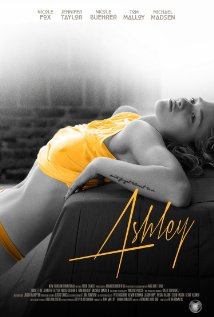
 Ashley – October 11, 2011 final draft script by Domenic Migliore – hosted by: Scribd – in pdf format
A teenage girl, distraught from her vain attempt to connect with her estranged mother, resorts to cutting herself. When she develops an online relationship with an older woman, she learns to accept her sexuality and the endless solitude of sprawling suburbia.
Information courtesy of imdb.com
*I fixed the broken link.
The Writers Lab will bring 8 women screenwriters over the age of 40 together with established mentors from the film industry for an intimate gathering and intensive workshop at Wiawaka Center for Women on Lake George, NY from September 18-20, 2015.
SimplyScripts will fund the submission of Any Women Screenwriter who is a member of the SimplyScripts discussion board who applys for this. Just go to the Discussion board and private message me, “I am applying NYWIFT”.
For information on how to apply, visit New York Women in Film & Television.